No Shortcuts, No Apologies: The Uncompromising Standard That Defines Serious Design
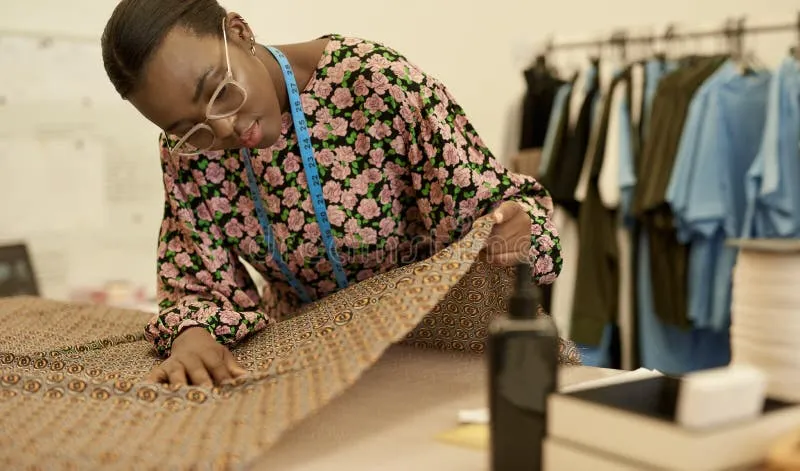
Photo: fashion designer examining garment quality in studio with focused concentration, via thumbs.dreamstime.com
There is a particular kind of silence that settles over a design studio when a collection is scrapped. Not the silence of failure, exactly—but something closer to the silence of refusal. The refusal to release something that does not meet the standard that was set when the work began. In contemporary American fashion, where speed-to-market is treated as a competitive advantage and the pressure to fill seasonal calendars is relentless, that silence is increasingly rare. At Joan Design, it is considered essential.
The question of where to draw the line—between a garment that is finished and one that is truly resolved—is perhaps the most defining question a designer faces. And how a studio answers it reveals more about its values than any mission statement ever could.
The Moment the Work Becomes a Decision
Every design process contains a specific inflection point. It arrives after the initial concept has been developed, after the first toile has been constructed, after revisions have been made and materials have been sourced. It is the moment when the work is close—close enough that releasing it would be defensible, close enough that most observers would not immediately identify what is missing. It is precisely at this moment that the 'good enough' standard exerts its strongest pull.
For designers operating within commercial timelines, the temptation to accept this threshold is understandable. Months of labor have already been invested. Fabric has been cut. Patterns have been graded. The infrastructure of production has been mobilized. Walking away from that investment requires a particular kind of conviction—the belief that the integrity of the final piece is worth more than the sunk cost of the work that preceded it.
At Joan Design, this conviction is not treated as exceptional. It is treated as routine. The design philosophy holds that every garment carries the memory of the decisions made during its creation. A compromise made in the interest of expediency does not disappear once the garment is finished—it remains embedded in the construction, visible to anyone who knows how to look.
What Compromise Actually Looks Like
It is worth examining what design compromise looks like in practice, because it rarely announces itself as such. It arrives in the form of a fabric substitution that is 'close enough' to the original specification. It appears when a seam allowance is adjusted to accommodate a pattern that was not quite right. It surfaces when a silhouette is softened—not because the softening serves the design, but because the original line proved technically difficult to execute at scale.
Each of these decisions, taken individually, may seem minor. Collectively, they produce a garment that is a diluted version of its own intention. The concept that inspired the work is still technically present, but it has been filtered through a series of small concessions until what remains is a shadow of the original vision.
The American fashion market is not short of examples. Collections that arrive in stores bearing the aesthetic signatures of a designer's vision but lacking the structural integrity that would give that vision genuine authority. Garments that photograph beautifully and wear poorly. Pieces that suggest quality without actually delivering it. The customer who purchases such a garment may not be able to articulate precisely what is missing—but they will feel it, often within the first season of wear.
The True Cost of 'Good Enough'
The argument for accepting the 'good enough' standard is usually framed in economic terms. Scrapping months of work is expensive. Restarting a development process delays a collection's release. The cost of uncompromising standards, by this logic, is a cost that the market will not always reward.
This framing misunderstands where the actual cost resides. When a designer accepts a compromise, the cost is not absorbed by the studio—it is transferred to the customer. The customer pays full price for a garment that does not fully deliver on its implicit promise. They invest in something that will not age as gracefully as it should, that will not wear as well as it could, that will not hold its shape or its relevance across the years of use that justify its price.
At Joan Design, the economic argument is inverted. The cost of compromise is understood as a long-term liability, not a short-term savings. A garment released before it is truly resolved undermines the trust that a design relationship with a customer requires. That trust, once lost, is far more expensive to rebuild than any single collection.
Rebuilding from Refusal
The decision to reject a design direction and begin again is not made easily, and it should not be romanticized. It involves genuine loss—of time, of resources, of the creative momentum that accumulates around a concept as it develops. It requires a designer to hold two contradictory positions simultaneously: deep investment in the work that has been done, and clear-eyed assessment of its shortcomings.
What emerges from that process, when it is undertaken honestly, is almost always stronger than what would have been released otherwise. The constraints imposed by starting over—the need to find a solution that is not only correct but achievable—often produce design decisions of greater elegance and precision than the original approach. The refusal to compromise becomes, paradoxically, a generative act.
This is not a comfortable process, and it is not meant to be. The discomfort is part of the mechanism. A design standard that does not cost anything to maintain is not a standard at all—it is a preference. The standard only becomes meaningful at the moment when honoring it requires sacrifice.
What Customers Carry Home
For the customer who ultimately wears a Joan Design garment, the history of these decisions is invisible. They did not witness the rejected samples or the abandoned pattern iterations. They were not present for the conversations in which a direction was declared insufficient and set aside. What they hold in their hands is simply a finished piece of clothing.
But the choices made during that invisible process are not absent from the garment. They are present in the way the fabric falls, in the precision of the construction, in the coherence between the design's intention and its execution. They are present in the way the garment performs over time—not just in the first wearing, but in the fifth year of ownership.
Understanding the value embedded in an uncompromising design standard is, ultimately, a form of literacy. It is the ability to recognize that a garment's quality is not only a function of the materials used or the techniques applied, but of the decisions that were made—and refused—long before the first stitch was placed. At Joan Design, that refusal is the foundation upon which everything else is built.