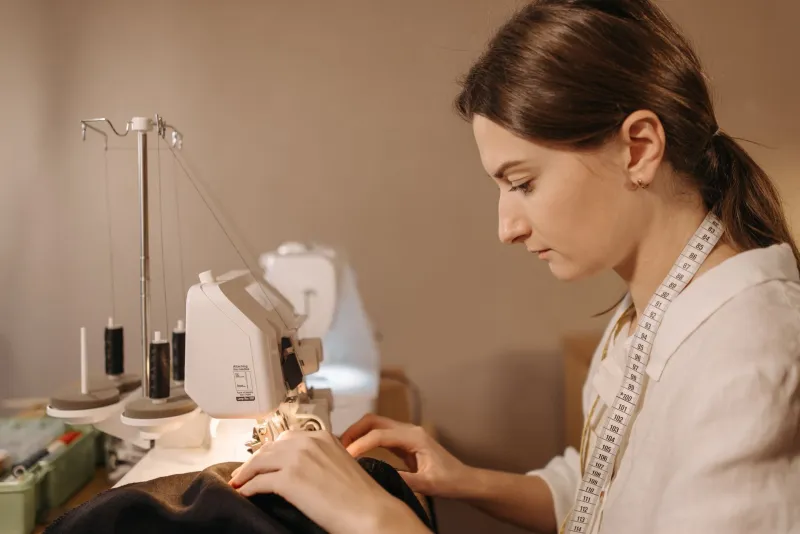
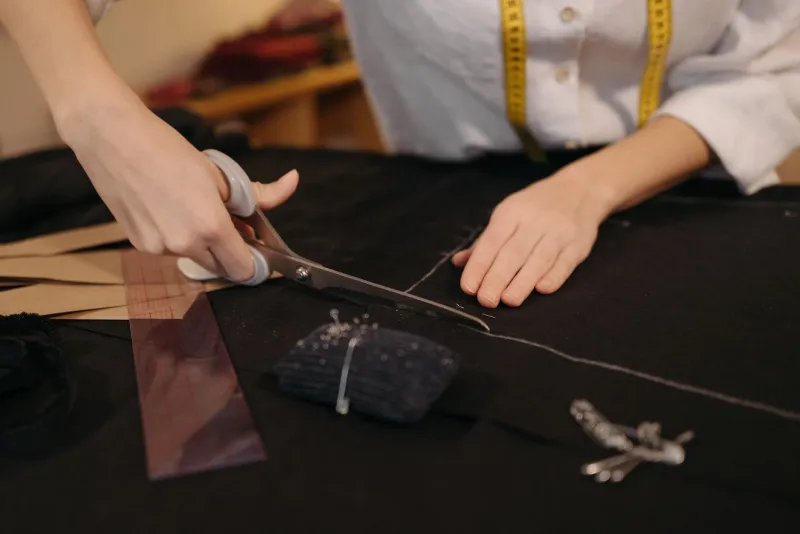
Craft in the Crack: How Intentional Imperfection Is Redefining Contemporary Design Excellence
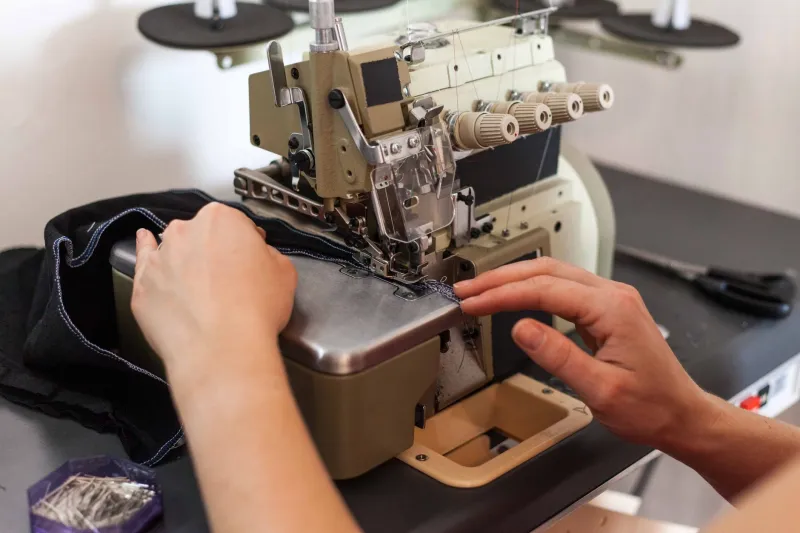
For decades, American consumers were taught to read perfection as quality. A precisely topstitched hem, a seam that lay flat without a single pucker, a silhouette so symmetrical it could have been drawn by a compass — these were the markers of a well-made garment. Luxury, by this logic, was the elimination of all evidence that human hands had ever touched the cloth.
Something has shifted.
Across contemporary fashion studios and independent design houses, a deliberate counter-movement is gaining momentum. Designers are leaving edges raw, cutting hems at angles that defy the horizontal, and allowing fabric to gather or release in ways that feel less engineered than discovered. What might once have been flagged during quality control is now being sent down the runway as a statement of intent. The imperfection, it turns out, is the point.
The Philosophy Behind the Unresolved
To understand why this is happening, it helps to examine what perfection in garment construction was always trying to communicate. Immaculate finishing historically signaled wealth — the kind of wealth that could afford the time, labor, and materials required to conceal every trace of process. The garment arrived as a finished object, sealed and complete, with no visible evidence of its making.
But that concealment carries an inherent tension. It removes the viewer from the act of creation. It suggests that clothing exists as product rather than practice — that the studio, the draping stand, the hours of iteration simply did not happen.
Contemporary designers working within what might be called an intentional imperfection philosophy are pushing back against that erasure. By leaving a seam allowance exposed, allowing a hem to fray at a controlled rate, or cutting a neckline that dips lower on one side by a full inch, they are insisting that the process remain visible. The garment becomes a record of its own making.
This is not carelessness. It is, in many ways, a more demanding form of craftsmanship — one that requires the designer to distinguish precisely between an unresolved edge that communicates and one that merely looks unfinished. The line between the two is thin, and navigating it demands exceptional design literacy.
Asymmetry as Authorship
Of all the tools in this vocabulary, asymmetry may be the most immediately legible. A hemline that rises sharply from front to back, a single oversized sleeve paired with a fitted one, a lapel that exists on only one side of a jacket — these choices register immediately as decisions. No one accidentally cuts a collar that way.
What asymmetry introduces into a garment is a sense of ongoing movement, of a silhouette that has not fully settled. The eye is asked to complete what the designer has deliberately left open. In this way, the wearer becomes a participant in the design rather than simply a surface for its display.
Several independent American design labels have built their entire visual identity around this principle. Rather than presenting collections as a series of resolved, interchangeable looks, they offer garments that feel more like individual studies — each one exploring a specific question about proportion, balance, or the relationship between structure and release. The asymmetry is not decorative. It is the argument.
Raw Edges and the Honesty of Material
The raw edge is perhaps the most polarizing element in contemporary design's embrace of imperfection. For a consumer trained to associate a clean, finished hem with quality, a fraying border can read as negligence. But within the context of an intentional design practice, it communicates something entirely different: a respect for the material on its own terms.
Fabrics have natural behaviors. Linen frays in a particular way. Denim unravels in another. A raw-edged garment is one that has been cut and then allowed to behave according to its own logic rather than being forced into conformity through binding or serging. There is a kind of honesty in this approach — an acknowledgment that the cloth was once a fiber, that it exists in time, and that it will continue to change.
This philosophy connects meaningfully to broader conversations happening across American fashion culture about sustainability and longevity. A garment designed to evolve — to fray at its edges in a way the designer anticipated and even invited — is one that develops a relationship with its wearer over time. It does not arrive perfect and then degrade. It arrives with potential and then becomes.
Luxury Reconsidered
The implications of this movement for how Americans understand luxury are significant. For much of the twentieth century, luxury in fashion was defined by exclusivity, precision, and the suppression of any evidence of labor. The garment was meant to feel effortless — as though it had simply materialized, fully formed and flawless.
Intentional imperfection challenges that definition at its foundation. If the marks of making are present — if the hand of the designer is legible in an uneven seam or a deliberately distressed finish — then luxury shifts from being about concealment to being about authorship. The value is not in the absence of process but in the presence of a specific, irreproducible vision.
This is a definition of luxury that aligns more naturally with American craft traditions than the European atelier model often invoked in fashion discourse. The American design sensibility has long harbored a respect for the made object — for the visible joint in a piece of furniture, the hand-thrown irregularity of a ceramic, the variation in a hand-dyed textile. Intentional imperfection in contemporary clothing draws from this same cultural well.
Reading the Garment Correctly
For the consumer, engaging with this design philosophy requires a recalibration of how garments are evaluated. The question is no longer simply whether a piece is technically perfect but whether its imperfections are intentional, considered, and communicative.
This is a more sophisticated form of fashion literacy, and it is one that rewards close attention. A raw hem on a mass-produced garment is a cost-cutting measure. The same raw hem on a piece from a design studio with a coherent philosophy behind it is a statement about materiality and time. Context, as always, determines meaning.
At Joan Design, this distinction sits at the heart of how we think about contemporary fashion. Design is not the elimination of variation. It is the considered orchestration of it — the capacity to decide which imperfections serve the work and which undermine it, and to execute that decision with full awareness of what it communicates.
The crack, as the poet once suggested, is where the light gets in. In contemporary fashion design, the unfinished gesture may be precisely where the most interesting conversations are beginning.