Built to Outlast: The Design Philosophy Behind Garments That Endure for Decades
There is a particular kind of ambition in designing something you intend to outlive the moment. It asks more of a designer than novelty ever could. Novelty is easy — it simply requires being different. Durability, on the other hand, demands precision, restraint, and an intimate understanding of how a garment behaves not at the point of purchase, but across hundreds of wearings, dozens of washings, and the slow passage of years.
Contemporary fashion is undergoing a quiet but consequential recalibration. Where the industry once measured success in sell-through rates and seasonal turnover, a meaningful segment of designers and consumers is now asking a harder question: what does it take to make something that genuinely lasts?
Rethinking Luxury From the Ground Up
For much of the twentieth century, American luxury fashion borrowed its vocabulary from European couture — the handwork, the heritage house, the seasonal spectacle. Luxury was understood primarily as exclusivity and aesthetic distinction. Durability was assumed, rarely interrogated.
That assumption has begun to fracture. A generation of consumers who came of age watching fast fashion collapse under its own contradictions is now redefining what premium actually means. Increasingly, the answer has less to do with a logo and more to do with longevity. The most compelling luxury proposition available today may simply be this: a garment that does not fail you.
This is not a sentimental argument. It is a structural one. When a well-constructed piece remains wearable and aesthetically relevant for ten or fifteen years, its cost-per-wearing drops to a fraction of what a cheaper alternative would demand over the same period. Longevity, reframed through economics, becomes the most rational form of value.
The Technical Demands of Lasting Construction
Designing for durability begins long before a pattern is cut. It starts with an honest assessment of how a garment will actually be used — and where it will fail.
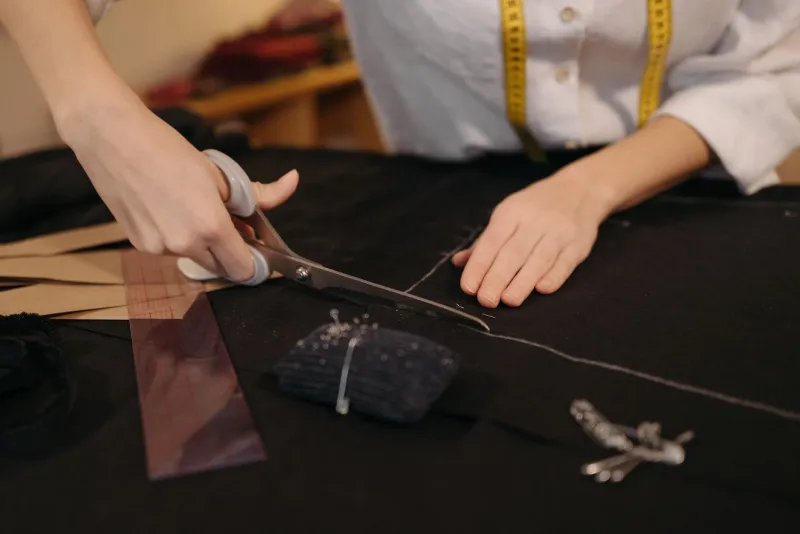
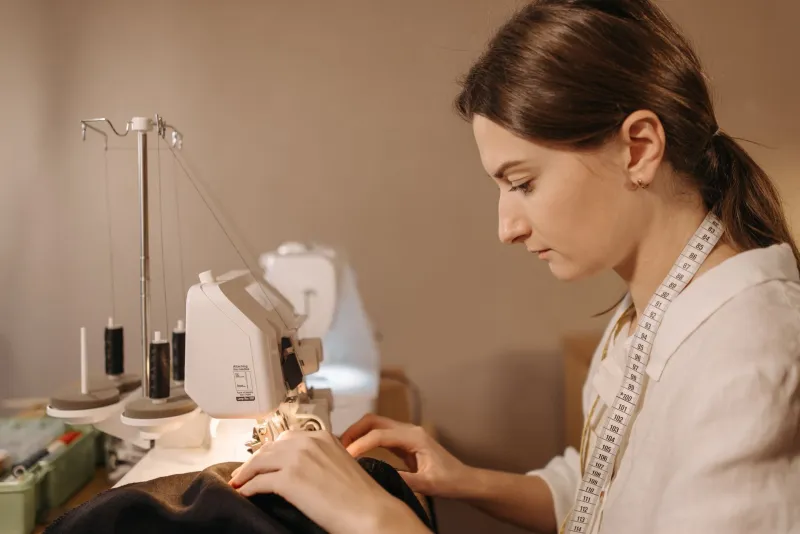
Seam construction is among the most revealing indicators of a designer's commitment to longevity. Flat-felled seams, used extensively in quality denim and tailoring, encase raw edges entirely, dramatically reducing the likelihood of fraying over time. French seams, favored in fine blouses and lightweight suiting, achieve a similar result through a different method, folding the seam allowance inward to create a clean interior finish that reinforces the join. These techniques require additional time and skill. They are not incidental choices — they are declarations of intent.
Reinforcement at stress points is equally critical. Bartack stitching at pocket openings, belt loops, and button placements distributes tension across a wider area, preventing the localized tearing that prematurely ages otherwise well-made garments. The presence or absence of these details is one of the clearest ways to read a designer's actual priorities, as opposed to their stated ones.
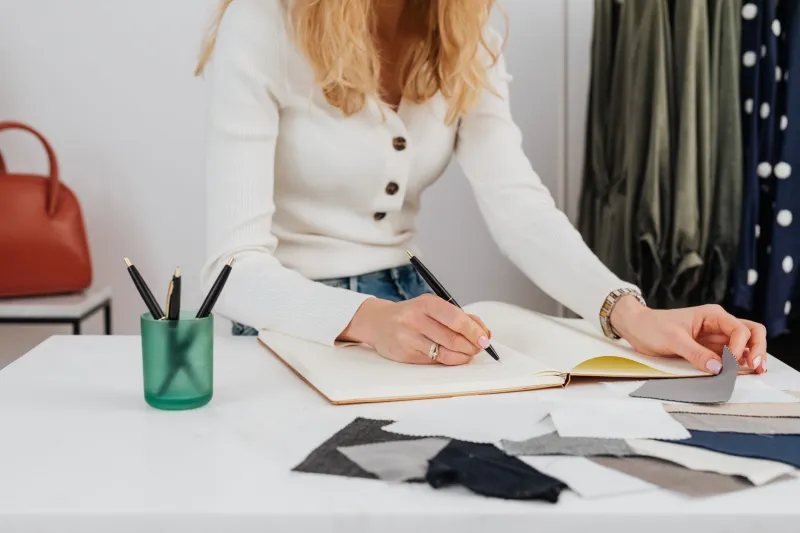
Fabric selection compounds every construction decision. A beautifully sewn garment made from a low-grade textile will still degrade — pilling, fading, or losing its hand — within a few seasons. Designers committed to longevity tend to gravitate toward tightly woven natural fibers: high-thread-count cottons, wool with a dense weave structure, silk charmeuse with sufficient weight to resist snags. These materials cost more at the source. They also hold their character across years of wear in a way that most synthetic blends simply cannot replicate.
Timelessness as a Design Discipline
Construction alone cannot guarantee longevity. A garment may survive decades of physical use and still become unwearable — not because it has fallen apart, but because it has fallen out of relevance. Designing for endurance therefore requires aesthetic decisions as deliberate as technical ones.
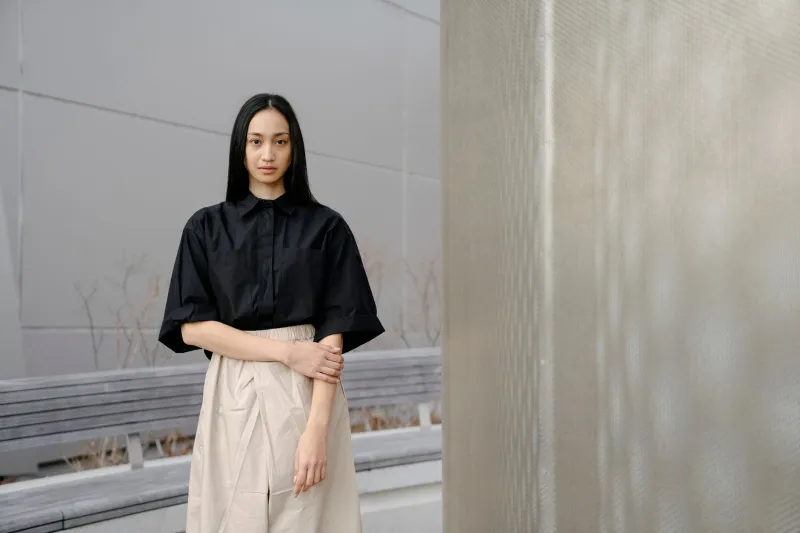
The designers most successful in this space tend to share a certain restraint. Their silhouettes are confident without being aggressive. Their details are precise without being precious. They work within a visual language that has proven its staying power across multiple decades — clean line structure, considered proportion, a color palette anchored in tones that read as sophisticated rather than seasonal.
This is not the same as designing something boring. The distinction matters. A garment can be visually compelling, even quietly arresting, without being tethered to a specific cultural moment. The challenge is to create something with enough personality to be loved and enough neutrality to remain relevant — a balance that requires genuine design intelligence rather than trend fluency.
The Repair Relationship
One aspect of longevity-focused design that rarely receives sufficient attention is the designer's responsibility to the garment after it leaves the studio. A piece built to last a decade or more will inevitably require maintenance — a replaced button, a reinforced lining, a let-out seam. How a garment is designed to accommodate these interventions speaks directly to how serious the designer is about their durability claims.
Some contemporary designers are beginning to build repairability into their work from the outset. This means maintaining consistent thread colors across production runs, designing linings that can be accessed and replaced without dismantling the outer shell, and providing care documentation detailed enough to actually guide a wearer through the garment's long life. A few American brands have gone further, establishing in-house repair programs that allow customers to return pieces for professional restoration — closing a loop that the broader industry has largely left open.
This approach requires a different relationship between designer and consumer. It asks both parties to think of clothing not as a product to be consumed but as an object to be stewarded.
What This Means for the Contemporary Designer
The shift toward longevity-centered design is not without its commercial pressures. A studio that produces pieces intended to last twenty years is, in a very real sense, working against the logic of repeat purchase. This demands either a higher initial price point — justified by the genuine quality of the work — or a broadening of the studio's relationship with its clientele beyond the transactional.
Many of the designers navigating this tension most successfully are those who have built their practices around a clearly articulated philosophy rather than a seasonal product cycle. Their clients are not buying a jacket for fall. They are investing in a point of view — a specific understanding of how clothing should be made and why that approach produces something worth preserving.
At Joan Design, this philosophy feels less like a trend and more like a natural extension of what thoughtful design has always demanded. To make something well is to make something that endures. The garment that outlasts its moment does not simply survive — it accumulates meaning, becoming richer for having been worn, cared for, and carried forward through a life.
That, in the end, may be the most honest definition of luxury available to contemporary fashion.