Where the Needle Meets Intent: Reading a Garment's Construction as Creative Language
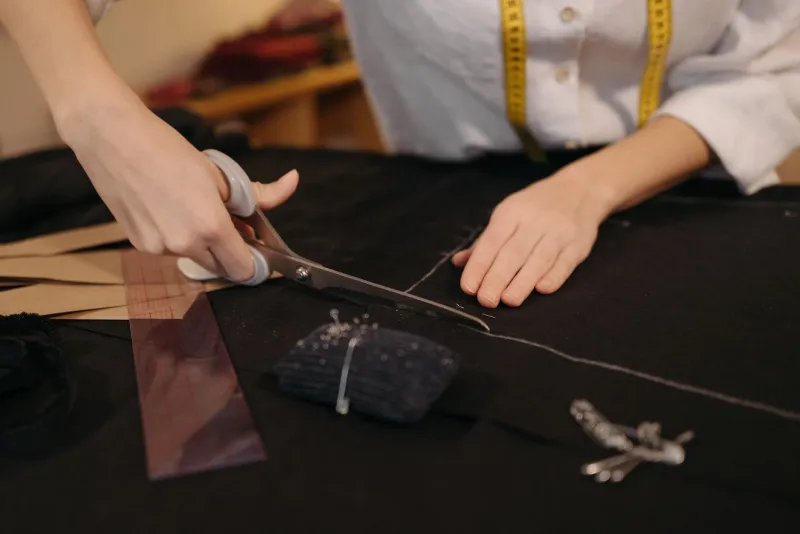
There is a particular kind of knowledge that only comes from turning a garment inside out. The exterior of a well-made piece may communicate proportion, color, and silhouette—but the interior tells an entirely different story. It is there, in the seam allowances and the stitching patterns, in the choices a designer made when no one would be watching, that genuine creative philosophy reveals itself.
In contemporary American fashion, where the distance between a thoughtfully designed garment and a trend-driven facsimile can appear deceptively narrow, construction details have become one of the most reliable indicators of intentional design. Learning to read them is not merely a matter of quality assessment. It is an act of understanding what a designer believes clothing should do—and be.
The Seam as a Statement
At its most fundamental level, a seam is a structural necessity. Two pieces of fabric must be joined; the seam accomplishes this. But within that utilitarian function lives an enormous range of expressive possibility. The decision to press a seam open rather than to one side affects not only the drape of the finished garment but the visual weight of the silhouette. A flat-felled seam—where one allowance folds over the other and is topstitched down—introduces a visible line that can either reinforce or complicate the design's geometry.
Exposed seams, once associated primarily with deconstructivist movements in European fashion, have found a quieter home in contemporary American ready-to-wear. When employed with intention, they function as an honest acknowledgment of construction—a designer's way of saying that the process itself is part of the product. When deployed carelessly, however, they read as unfinished rather than deliberate. The difference lies almost entirely in consistency and context: whether the raw edge is treated with the same precision applied to every other detail in the collection.
Bound Edges and the Discipline of Finishing
If exposed seams represent a kind of structural transparency, bound interior edges represent something closer to private elegance. Hong Kong finishing—a method in which each seam allowance is individually wrapped in a strip of bias-cut fabric—is time-consuming, material-intensive, and entirely invisible during wear. It is, by most commercial standards, unnecessary. And yet it persists in garments made by designers who understand that what a piece feels like against the body, and what it looks like when its wearer undresses, matters as much as its public presentation.
The choice of binding material communicates further. A binding that matches the shell fabric suggests restraint and unity. One that introduces a contrasting color or texture—a silk charmeuse binding inside a structured wool blazer, for instance—signals a design sensibility that extends its care into spaces the world will rarely see. These are not accidents. They are the result of deliberate decisions made during the sampling process, decisions that cost time and money and that a designer chose to make anyway.
For the American consumer navigating an increasingly crowded marketplace, bound interior edges are among the most reliable markers of garment integrity available. They require no expertise to identify and no specialized knowledge to appreciate. They simply require the willingness to look.
Topstitching as Visual Rhythm
Few construction details are as immediately visible—or as frequently misunderstood—as topstitching. In workwear-influenced and utilitarian design, topstitching is structural: it secures layers, reinforces stress points, and signals durability. In more refined contemporary contexts, it becomes something closer to graphic design applied through thread.
The distance of a topstitch from a seam or edge, the weight of the thread relative to the base fabric, the decision to use a matching or contrasting color—each variable contributes to the overall visual rhythm of a garment. A single row of precise topstitching along a lapel edge reads as understated confidence. A double row at a slightly unconventional distance introduces tension and personality. Irregular or inconsistent topstitching, regardless of intent, communicates a loss of control over the design's internal logic.
Designers who treat topstitching as compositional—who consider it in relation to the garment's other linear elements, its seam lines, its dart placements, its hem geometry—produce pieces in which every visible stitch feels like part of a considered whole. This is what separates a garment that rewards extended looking from one that reveals its limitations under scrutiny.
Hidden Architecture: What You Cannot See
Perhaps the most sophisticated construction decisions are those that disappear entirely into the finished garment. Interfacing choices, for example, determine how a collar stands, how a waistband holds its shape across a long day of wear, how a lapel rolls rather than folds. The wrong interfacing in a jacket can undermine an otherwise accomplished design; the right one is never noticed, because it simply allows the garment to perform as intended.
Similarly, the placement and engineering of darts—those tapered folds that allow flat fabric to accommodate the body's three-dimensional form—speak directly to a designer's understanding of the human figure. A poorly placed dart pulls fabric toward the wrong point, creating visual tension and physical discomfort. A dart positioned with precision disappears into the silhouette, and the garment appears to have been shaped rather than constructed.
This hidden architecture is where a designer's technical education and aesthetic vision converge most completely. It cannot be faked through surface embellishment or obscured by trend. It either works or it does not, and experienced eyes—as well as bodies that have worn both well-made and poorly made clothing—know the difference immediately.
Developing a Construction Vocabulary
For those looking to apply this understanding to their own wardrobes, the practice begins simply: handle garments with more deliberation. Turn them inside out. Run a thumb along interior seam allowances. Examine how hems are finished—whether by a clean blind stitch, a visible topstitch, or a serged edge left unbound. Consider whether the buttons are sewn with a thread shank that allows them to button and unbutton without straining the fabric, or whether they lie flat against the surface in a way that will eventually damage both button and cloth.
None of this requires a fashion education. It requires only the recognition that construction is a language, and that designers who speak it fluently leave evidence of that fluency throughout their work—not only in the places designed to be admired, but in every seam, every stitch, every quietly made decision that holds a garment together long after the season has passed.
At Joan Design, we believe that the most enduring contemporary clothing is built on exactly this kind of commitment—the understanding that intention, expressed through technical discipline, is what transforms fabric into something worth keeping.