The Lines That Shape You: What Seam Placement Reveals About a Designer's Mastery
Look closely at a garment you love — one that seems to fit without effort, that moves when you move, that somehow flatters without announcing itself. Chances are you cannot immediately explain why it works. The fabric may be beautiful, the color exactly right, but the deeper answer lies in something most consumers never consciously observe: the precise, deliberate placement of every seam.
Seam placement is, in many respects, the silent grammar of fashion design. It is the structural decision made long before a single thread is drawn through a needle, and it governs nearly every quality a finished garment ultimately possesses. Yet it remains almost entirely invisible to the person wearing the piece — which is, arguably, exactly the point.
A Decision Made in Two Dimensions That Lives in Three
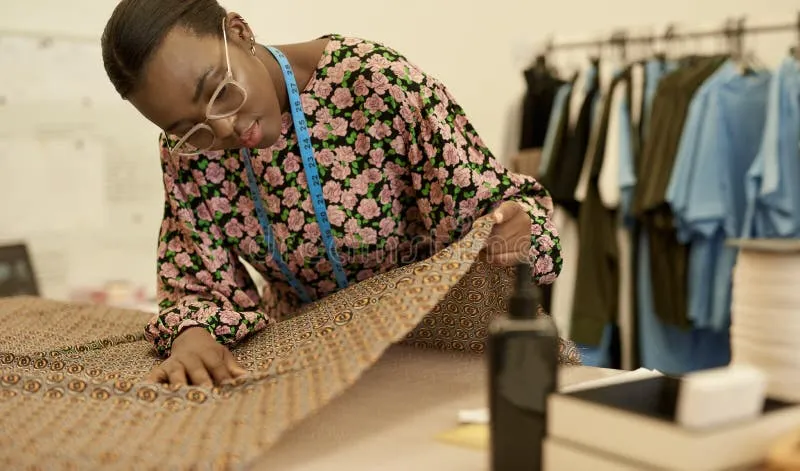
The fundamental challenge of garment construction is a geometric one. A flat piece of woven or knit fabric must be persuaded to conform to a three-dimensional human body — a body that breathes, reaches, sits, walks, and carries its own particular proportions. The seam is the designer's primary tool for making that translation work.
Where a seam falls on the body determines which panels of fabric are joined and, consequently, how the resulting garment distributes tension and ease across the wearer's frame. A side seam placed even a centimeter forward or backward of its conventional position will shift the entire visual axis of a trouser leg or a jacket body. The wearer may simply register that the garment "fits well" or "looks right" without ever identifying the precise reason.
Contemporary designers working in the American market — where consumers have grown increasingly sophisticated about quality but remain largely unfamiliar with technical construction — describe seam placement as one of the most consequential decisions in the design process, and one of the least discussed.
The Silhouette Is Built Before the Fabric Is Cut
In structured tailoring, the seam map of a jacket or coat is essentially the architectural blueprint of the finished piece. Princess seams — those long, curving lines that run vertically through the front and back panels — exist precisely because a straight side seam cannot, on its own, accommodate the three-dimensional curves of the torso while also creating a smooth, fitted surface. By introducing additional seam lines that travel over the fullest point of the chest or shoulder blade, a designer gains the ability to shape the fabric to the body rather than simply wrapping it.
The placement of those princess seams is where individual design philosophy becomes visible. Set them too far toward the center front and the garment reads as narrow and constricting. Shift them toward the side and the chest panel widens, creating a sense of breadth and ease. The same seam, moved by two inches in either direction, produces what feels like an entirely different garment — even if the fabric, the lining, the buttons, and every other visible element remain identical.
This is the kind of micro-decision that defines a brand's design sensibility over time, often without the brand ever explicitly articulating it.
Movement as a Design Criterion
Beyond silhouette, seam placement is one of the primary variables governing how a garment moves with — or against — the body. A sleeve seam positioned at the true anatomical shoulder point behaves very differently from one that sits slightly forward, which is a common technique in contemporary ready-to-wear designed for people who spend significant time seated or working at a desk. The forward-set sleeve accommodates the natural rotation of the shoulder in a resting position, reducing the pull across the upper back that plagues so many otherwise well-made jackets.
Similarly, the placement of the inseam and outseam on a pair of trousers determines not only the visual line of the leg but the garment's behavior during movement. When the outseam is engineered to fall precisely along the side of the leg rather than rotating toward the front or back, the trouser maintains its intended silhouette throughout the day — a quality that reads as effortless but is the product of careful, intentional calculation.
Denim construction offers perhaps the most instructive example for American consumers, given the category's ubiquity. The yoke seam across the seat of a pair of jeans — that chevron or straight horizontal line just below the waistband at the back — is one of the most functionally significant seams in the entire garment. A curved yoke lifts and rounds the seat; a flatter yoke elongates it. The angle and depth of that single seam accounts for much of what distinguishes a flattering pair of jeans from one that simply does not work on a particular body, regardless of size or rise.
The Seam as Aesthetic Statement
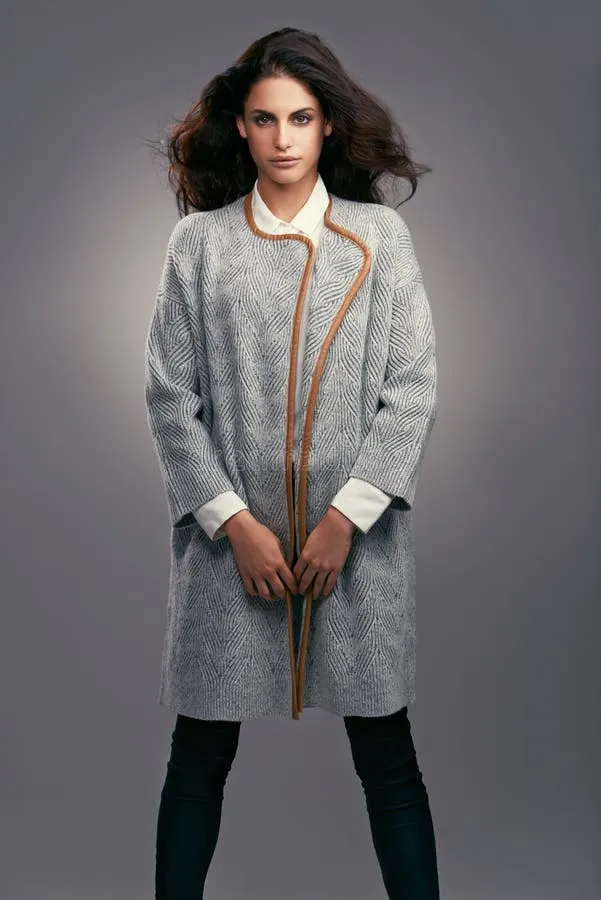
Not all seam placement decisions are purely functional. In contemporary fashion, exposed seams, unconventional seam lines, and deliberately misplaced construction details have become legitimate aesthetic languages in their own right. A seam that travels diagonally across the front of a coat where a clean, unbroken panel might be expected creates visual movement and draws the eye along a path chosen by the designer rather than dictated by convention.
This approach requires a particular kind of confidence. When seam lines depart from expectation, they become visible — and visibility demands that the decision be correct. A misplaced decorative seam that also distorts the silhouette or creates uncomfortable tension reads not as intentional but as careless. The designer who uses seam placement as an expressive tool must first have complete command of its functional implications.
Some of the most compelling contemporary American design studios have built recognizable visual identities around precisely this kind of structural expressiveness — using seam lines to create surface interest, to reference architectural or geometric influences, or to challenge the conventional mapping of the body without sacrificing wearability.
Reading What You Wear
For the informed consumer, learning to read seam placement is one of the most rewarding ways to develop an eye for quality and design intention. It requires no technical training — only the habit of looking carefully before asking why something works.
Turn a garment inside out and observe where the seam allowances fall, how the curves are notched or clipped, and whether the seam lines themselves are straight or gently contoured. Try the piece on and pay attention to where you feel resistance during movement and where you feel ease. Notice whether the visual lines of the garment — the side seams, the shoulder seams, the seams of a collar or cuff — fall where you expect them to, or whether they have been shifted in ways that subtly change your perception of the piece.
What you are observing, in each of these moments, is a designer's thinking made physical. Every seam represents a decision about how a flat material should meet a living body — and how that meeting should feel, look, and last. In this sense, the seam is not merely a structural necessity. It is the primary medium through which design intention becomes wearable reality.
At Joan Design, this kind of structural consideration is not a technical footnote — it is the foundation of every collection. The most refined garment is the one whose construction you never consciously notice, because every decision within it has been made exactly right.