Dressed With Conviction: The Design Anatomy of a Garment That Demands Full Commitment
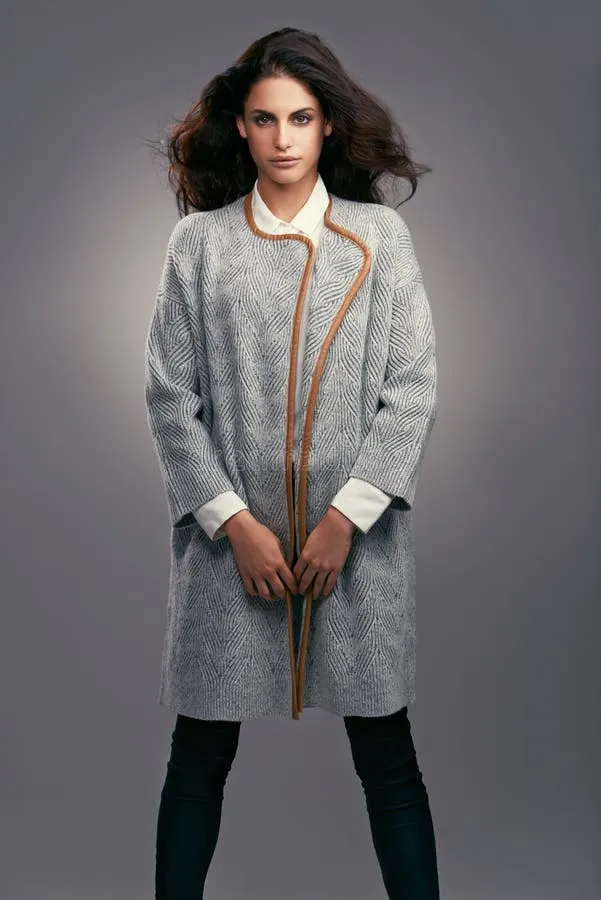
Photo: bold contemporary fashion editorial woman wearing sculptural statement coat confident posture studio, via thumbs.dreamstime.com
There is a particular moment that most people who care about clothing have experienced at least once: standing in front of a mirror, wearing something that feels simultaneously thrilling and exposing. The garment is not too large or too small. The fabric is correct. The color is intentional. And yet the instinct arrives—to layer something over it, to soften it with a scarf, to introduce an apologetic cardigan that quietly neutralizes the entire effect. That instinct is not a sartorial problem. It is a signal. It means the piece has crossed what designers sometimes refer to, informally, as the confidence threshold.
Not every garment carries this quality. Most clothing is designed to integrate—to participate in an ensemble, to cooperate with whatever surrounds it. But certain pieces are constructed, whether through silhouette, proportion, surface, or structure, to resist that cooperation. They are designed to be the final word. And wearing them requires something that no amount of technical styling knowledge can substitute: the willingness to fully arrive.
What Designers Build Into a Statement Piece
The confidence threshold is not accidental. It is the result of deliberate choices made at the design stage, each of which compounds the others. A dramatically exaggerated shoulder, for instance, does not merely alter the silhouette—it changes the spatial relationship between the wearer and the room. Volume placed at the sleeve head creates physical presence that precedes conversation. A designer who makes that choice understands that the garment will not allow the wearer to disappear.
Similarly, the use of a single saturated color across an entire look—what stylists sometimes call a monolithic treatment—removes the visual relief that mixing provides. There are no neutral zones for the eye to rest. The garment asks to be seen completely, without interruption. This is not aggression; it is precision. The designer has eliminated ambiguity as a design decision.
Surface texture operates in the same register. A heavily structured brocade, a sculptural pleating technique, or a fabric with pronounced optical movement all perform differently in light and motion than their quieter counterparts. These materials are not passive. They assert themselves. And the person wearing them must be willing to let that assertion stand unchallenged.
The Psychology of Commitment in Dressing
What separates a garment that whispers from one that demands is not merely the object itself—it is the transaction between the object and the person wearing it. A bold architectural coat, worn with visible hesitation, reads differently than the same coat worn with ease. The garment does not change. The wearer's relationship to it does, and that relationship is perceptible.
This is not a matter of confidence in the conventional, self-help sense of the word. It is something more specific: a willingness to be coherent with the piece, to match its energy rather than apologize for it. Many people who wear statement garments tentatively are not lacking in personal confidence—they are simply unaccustomed to the particular kind of presence the garment requires. The piece is speaking at a volume they have not yet calibrated to.
Designers who work at this register often speak about intention as the invisible layer of a garment. The technical construction is visible. The material is tactile. But intention—the sense that the wearer has chosen this, fully and without reservation—is communicated through carriage, through stillness, through the absence of the nervous adjustments that signal internal conflict. Learning to wear a demanding piece is, in part, learning to stop negotiating with it.
Recognizing the Threshold Before You Buy
For the American consumer navigating a retail landscape that ranges from fast fashion to considered investment dressing, identifying a threshold piece before purchasing is a practical skill worth developing. The question to ask in the fitting room is not simply do I like this? but am I willing to be this? The distinction matters.
A garment that crosses the confidence threshold typically has at least one element that cannot be minimized without fundamentally altering the design. Remove the structured collar, and the coat becomes something else entirely. Swap the wide-leg trouser for a tapered silhouette, and the proportion that made the look coherent dissolves. These non-negotiable elements are the designer's signature—the points at which aesthetic intent becomes structural. They are also the points at which the wearer must decide whether to honor the design or quietly dismantle it.
It is worth noting that threshold pieces are not exclusively the domain of formal or occasion dressing. Contemporary design has produced statement pieces in every category—workwear, outerwear, even foundational separates. A blouse with an unusually deep V and a clean, unadorned body is not dramatic in the theatrical sense, but it requires a particular composure to wear without reaching for additional coverage. The threshold exists on a spectrum. What unites all points on that spectrum is the requirement for commitment.
The Studio Perspective: Designing for the Wearer Who Shows Up
At Joan Design, the question of conviction is central to how we approach the design of pieces that resist the background. We are interested in garments that have a point of view—not because statement-making is inherently the goal, but because clarity of intent is. A piece designed with genuine specificity will always ask something of the person who wears it. That is not a flaw. It is the evidence that something real was decided.
We design for the wearer who has considered the piece and chosen it—not impulsively, not because it was available, but because something in the design spoke to something in them. Those wearers do not need to be told to wear it boldly. They already understand that the garment and their willingness to inhabit it are part of the same gesture.
Wearing It Whole
The confidence threshold is, ultimately, a design philosophy made visible through the act of wearing. It is the point at which a garment stops being something you put on and becomes something you commit to. The pieces that demand this commitment are not always the most elaborate or the most expensive. They are simply the most honest—the ones in which the designer's intention is clear enough, and strong enough, that it asks to be met.
When you encounter a piece like that, the choice is straightforward: wear it whole, or don't wear it at all. There is no middle register that honors what it was made to be.