Honored Imperfection: How Intentional Flaws Are Becoming Fashion's Most Honest Signature
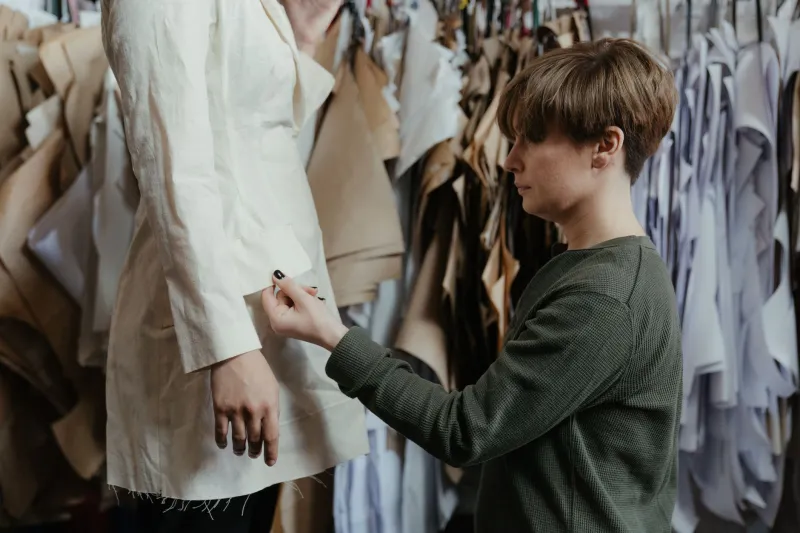
For most of the twentieth century, the standard of excellence in fashion was defined by its invisibility. A well-made garment was one that concealed its own making—where seams disappeared into linings, where edges were bound so cleanly they seemed never to have existed, and where the hand of the maker was erased entirely in service of a seamless ideal. Perfection, in this context, meant the absence of evidence.
That standard is being quietly, deliberately dismantled.
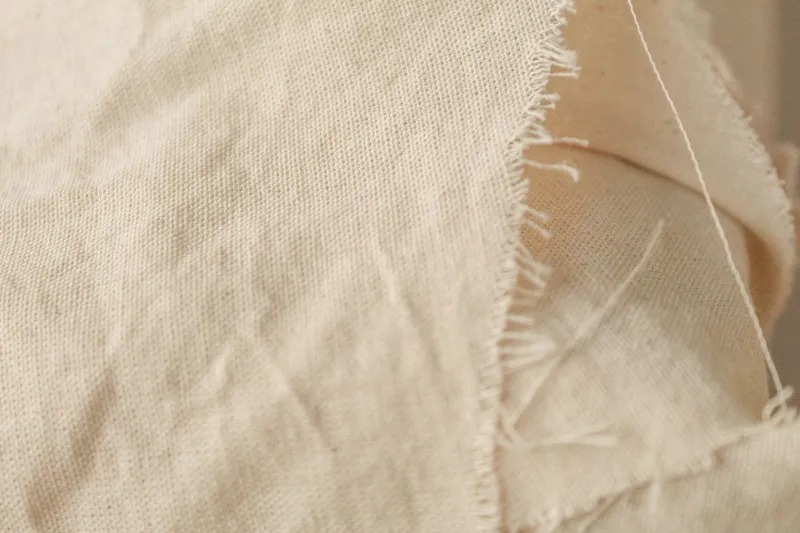
Across studios and collections from New York's garment district to independent ateliers throughout the American interior, a distinct design philosophy is asserting itself: that the mark of the maker is not a liability to be hidden, but a quality to be amplified. Asymmetrical hemlines, intentionally frayed edges, exposed basting stitches, and seams worn on the outside of a garment are no longer signs of an oversight. They are, increasingly, the point.
The Cultural Conditions Behind the Shift
This movement does not exist in a vacuum. It emerges from a specific cultural moment in which authenticity has become one of the most valued—and most scrutinized—qualities in consumer culture. American consumers, in particular, have grown acutely sensitive to the difference between what is genuine and what is performed. In a marketplace saturated with products optimized for visual perfection, the garment that shows its own construction carries an almost radical credibility.
There is also a generational dimension at work. Younger consumers who came of age watching mass production flatten the texture out of nearly every industry have developed a particular appreciation for evidence of the human hand. A slightly uneven topstitch, a hem that falls two millimeters lower on one side than the other, a pocket seam that sits proud of the fabric rather than sinking into it—these are not defects to this audience. They are proof of presence. They confirm that a person, not a machine, made a decision.
This appetite has given designers permission to stop correcting certain things they once would have refined away entirely.
Imperfection as Intentional Language
What distinguishes this philosophy from simple carelessness—and the distinction matters enormously—is the degree of deliberateness involved. A raw edge that has been intentionally left unfinished requires as much design consideration as one that has been meticulously bound. The designer must understand exactly where the fraying will occur, how far it will travel, how it will interact with the weight and weave of the fabric over time. In many cases, it demands more technical knowledge, not less, to execute an imperfection convincingly.
This is where the concept of controlled irregularity becomes useful. The designer is not abandoning craft. They are redirecting it. Rather than applying skill toward concealment, they are applying it toward disclosure—toward making visible the decisions, the tensions, and the physical realities of construction that conventional finishing would otherwise bury.
Asymmetry functions similarly. A collar that sits higher on the left than the right, or a sleeve hem that cuts at a diagonal rather than a parallel line, introduces a visual dynamism that a perfectly mirrored garment cannot achieve. When executed with intention, these choices animate the body in motion, creating garments that behave differently depending on how they are worn, how the wearer carries themselves, and how light falls across the form.
The Challenge to Traditional Luxury
None of this sits comfortably within classical luxury fashion's value system, and that tension is part of what makes the conversation so generative.
Traditional luxury has long equated flawlessness with worth. The logic was straightforward: the more labor invested in achieving an immaculate finish, the higher the garment's value. Imperfection, under this framework, represented failure—a failure of skill, of quality control, or of the brand's standards.
What contemporary designers practicing this philosophy are proposing is an alternative hierarchy of value. In their framework, the worth of a garment is not measured by how thoroughly it conceals its origins, but by how honestly it represents them. A visible hand stitch does not diminish the garment; it locates it within a human history of making. An exposed seam allowance is not sloppy; it is transparent.
This is, in its way, a significant philosophical argument about what fashion is for. Is clothing meant to present an idealized, frictionless surface to the world? Or is it meant to carry meaning—the meaning of process, of labor, of the specific conditions under which it came into being?
What This Means for the American Wardrobe
For American consumers navigating a market that has long defaulted to the polished and the predictable, this shift offers something genuinely different: garments with a point of view that is structural rather than merely decorative.
A jacket with an exposed lining seam along its back panel does not simply look interesting. It tells a story about the designer's confidence—their willingness to let the interior become the exterior, to trust the consumer to read construction as craft rather than error. It asks something of the wearer, too: a certain comfort with ambiguity, with the idea that beauty does not require resolution.
This is not a philosophy suited to every context or every consumer. But its growing presence in contemporary collections suggests that a meaningful portion of the American market is ready for it—is, in fact, hungry for it. The desire for garments that feel made, in the fullest sense of that word, is not a niche preference. It is a response to an oversaturated visual culture in which perfect things have become, paradoxically, the least interesting.
Design as Honesty
At its core, the embrace of intentional imperfection is an act of honesty. It refuses the fiction that clothing arrives in the world without effort, without decision, without the physical reality of hands and fabric and time. It insists on making that process legible—not as a confession of limitation, but as a form of integrity.
For designers working within this philosophy, every visible flaw is a considered statement. Every raw edge is a choice. Every asymmetry is an argument.
The rebellion, it turns out, is not against quality. It is against the pretense that quality was ever about perfection in the first place.