Exposed by Design: The New Sophistication of Showing Your Work
There is a particular kind of confidence required to leave something unfinished. In most creative disciplines, the instinct is to conceal the process — to sand, smooth, and seal until no trace of effort remains. Fashion has long operated by this logic, presenting garments as though they arrived fully formed, their inner architectures hidden behind careful linings and turned-under hems. But something meaningful is shifting in contemporary design studios, and the evidence is visible — quite literally — along the seams.
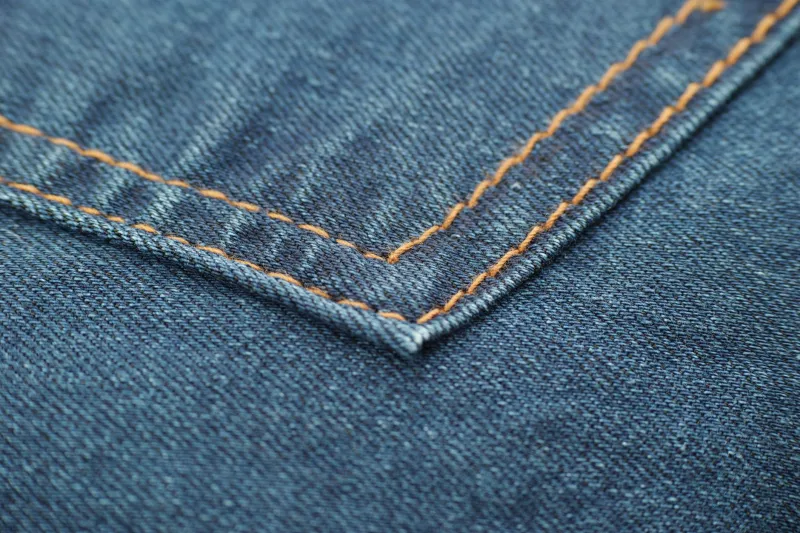
Across collections from established American designers and emerging labels alike, a new formal vocabulary is asserting itself: serged edges worn on the outside, topstitching elevated from utility to ornament, interfacings left partially exposed, and hems that end precisely where the fabric ends. These are not accidents or economies. They are statements.
The Difference Between Unfinished and Incomplete
The distinction matters enormously. An incomplete garment is one that hasn't been resolved — where decisions remain unmade, where the design hasn't arrived at its own conclusion. A strategically open garment, by contrast, is one that has arrived at a very specific conclusion: that concealment is not required, that the structure itself is worth seeing.
This is a fundamentally different creative posture, and it demands more of a designer, not less. When every construction detail is visible, every choice becomes load-bearing. The seam allowance that might otherwise be tucked safely inside a lining now exists as a design element in its own right. Its width, its finish, its relationship to the garment's exterior — all of it becomes part of the visual language the designer is speaking.
Joan Design has long held that construction is not separate from aesthetics but inseparable from it. The way a garment is built is the garment. Strategic openness is simply the logical extension of that belief, carried to its most transparent conclusion.
Why American Consumers Are Ready for This
The appeal of visible construction in contemporary American fashion is not accidental. It emerges from a broader cultural moment in which authenticity has become a primary value — one that consumers apply to the brands they support, the objects they acquire, and the clothing they wear.
For much of the twentieth century, American fashion culture was oriented toward a particular kind of aspiration: the appearance of effortlessness, the suggestion that good taste arrived naturally rather than through labor or intention. The polished, the seamless, and the perfectly finished were the markers of quality. Anything that showed its working risked appearing unready.
That hierarchy has quietly inverted. Today, a garment that shows how it was made communicates something that a perfectly concealed interior cannot: honesty. It suggests a designer who trusts both the work and the wearer — who believes that the person putting on this piece is sophisticated enough to read construction as language rather than as failure.
This is particularly resonant with American consumers who have grown increasingly skeptical of surfaces. In an era of visible supply chains, behind-the-scenes content, and a general cultural appetite for process over performance, a garment that hides nothing feels more trustworthy than one that hides everything.
The Psychology of the Visible Seam
To understand why exposed construction details carry psychological weight, it helps to consider what seams typically represent. Seams are the joints of a garment — the places where separate pieces of fabric are unified into a coherent form. Traditionally, they are hidden precisely because they reveal the made-ness of the thing: the fact that what appears whole was once many parts.
Exposing those seams, then, is an act of disclosure. It says: this was made. Someone cut these pieces and joined them with intention. The labor is real, and it is not something to be ashamed of.
This is a quietly radical position in a fashion landscape that has often treated manufacturing as something to obscure. When a designer chooses to surface the structure — to let the seam allowance breathe, to leave the raw edge as the finished edge — they are making an argument about value. They are saying that the making is part of what you are purchasing, and that it deserves to be seen.
Executing Strategic Openness With Precision
For designers working in this mode, the challenge is one of control. The line between intentional exposure and careless construction is drawn by the quality of every detail that remains visible. A raw edge that frays beautifully is a design decision; a raw edge that frays unpredictably is a failure of material knowledge.
This requires an exceptionally intimate understanding of fabric behavior. How a woven cotton ravels differs entirely from how a bonded technical fabric terminates. Designers working with strategic openness must know not only how they want a seam to look at the moment of construction, but how it will look after twenty washes, after two years of wear, after the garment has fully settled into its life.
The best work in this genre demonstrates a kind of forensic precision — exposed construction that is so carefully considered it could not be mistaken for anything other than a choice. The topstitching runs at an exact and deliberate distance. The raw hem is cut on a perfectly straight grain. The visible interfacing is placed with the same care as a patch pocket.
What This Shift Reveals About Design Maturity
Perhaps the most significant thing about the movement toward strategic openness is what it suggests about the current state of American design culture: that it is maturing. Maturity in design, as in most disciplines, often announces itself through a willingness to work with less — fewer layers of concealment, fewer apologetic gestures, fewer attempts to pre-empt the viewer's judgment.
A designer who exposes the construction of their work is, in a sense, inviting scrutiny. They are not asking for the benefit of the doubt. They are presenting the evidence directly and trusting that it speaks for itself.
This is the new sophistication: not the seamless surface that asks you to admire without looking too closely, but the open structure that invites you to look as closely as you like. The garment has nothing to hide, because everything worth seeing is already there.