The True Price of a Garment: How Designers Engineer Clothing to Outlast the Season That Made Them

When an American consumer stands in front of a rack and evaluates a garment's price, they are almost always solving the wrong equation. The number on the tag represents the cost of acquisition. What it does not represent—and what the fashion industry rarely volunteers—is the cost of ownership over time. These are fundamentally different figures, and confusing them is one of the most expensive habits a shopper can develop.
The designers who understand this distinction build clothing differently. Their decisions, made long before a garment reaches the sales floor, are a form of silent communication with the future wearer: a commitment that the piece will remain structurally sound, visually relevant, and worth reaching for years after its inaugural season.
Construction as the First Investment Decision
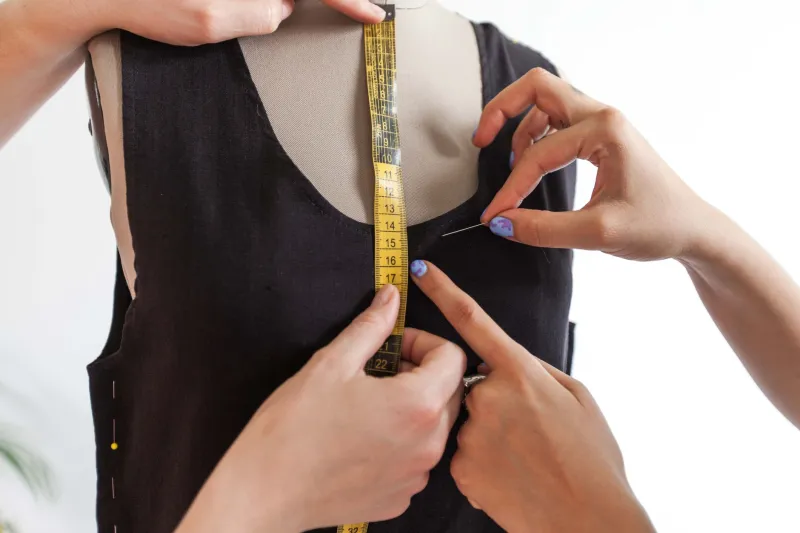
The internal architecture of a garment is largely invisible to the consumer at point of purchase, yet it is perhaps the most consequential determinant of longevity. Seam allowances—the extra fabric left beyond the stitch line—are a useful illustration. A generous seam allowance allows for future alterations as a body changes or as tailoring preferences shift. A minimal one, common in high-volume production, eliminates that flexibility entirely.
Similarly, the method by which a seam is finished determines how a garment ages under the stress of regular wear and washing. Flat-felled seams, French seams, and bound edges are more labor-intensive to produce and therefore more expensive, but they resist fraying in ways that a simple serged edge does not. For a designer whose intention is permanence, these choices are not optional refinements—they are foundational commitments.
Interlining and interfacing—the internal support structures that give collars their shape, lapels their roll, and waistbands their stability—are similarly invisible and similarly decisive. Quality interlining is fused or sewn with precision; lesser alternatives bubble, separate, and distort after repeated laundering. The difference between a jacket that looks impeccable after five years and one that looks exhausted after eighteen months often lives entirely in these hidden layers.
Fiber Selection and the Long Game
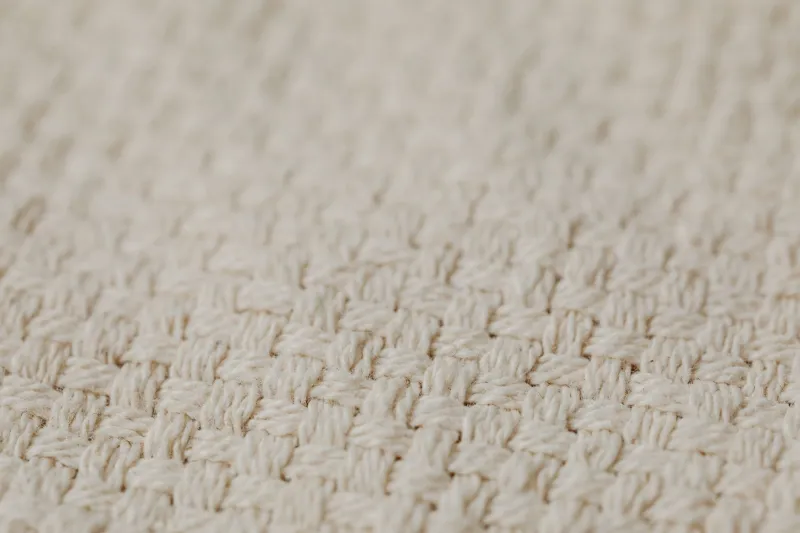
Not all natural fibers are created equal, and synthetic blends introduce a further layer of complexity. The designer's fiber selection is one of the earliest and most consequential decisions in the development process, and it carries direct implications for how a garment performs across years of use.
Wool, for instance, is remarkably self-maintaining. Its natural crimp allows it to recover from compression and resist wrinkling in ways that many synthetic alternatives cannot replicate. A well-constructed wool trouser, properly cared for, can remain a wardrobe anchor for a decade or longer. Linen, though it wrinkles readily, grows softer and more characterful with age—it is a fiber that improves under use rather than deteriorating from it.
The growing prevalence of synthetic blending in mainstream American fashion deserves scrutiny in this context. Polyester and nylon can extend a fabric's durability in specific technical applications, but they also tend to pill, trap odor, and resist the natural aging processes that give quality textiles their character over time. A fabric that pills aggressively after ten wearings has, in practical terms, a shorter useful life than its price point might suggest.
At Joan Design, fiber selection is treated as an ethical and economic commitment simultaneously. The question is never simply "what does this fabric cost per yard" but rather "what does this fabric cost per wearing across the life of the garment."
Proportion and the Tyranny of Trend
Beyond construction and material, the silhouette of a garment carries its own longevity calculus. This is where the economics of design intersect most directly with the cultural mechanics of the fashion industry.
Trend-driven proportion is, by design, self-limiting. An extremely wide leg or an aggressively cropped hem is legible as belonging to a specific moment. When that moment passes—and in contemporary American fashion, moments pass quickly—the garment signals its own obsolescence. The wearer is not simply out of fashion; they are visually dated in a way that no amount of styling can fully neutralize.
Designers who build for duration approach proportion differently. They study the silhouettes that have persisted across decades—the straight trouser, the unstructured blazer, the A-line skirt—and understand them not as conservative choices but as structurally sound ones. These proportions have demonstrated, through sustained cultural use, that they are not hostage to any particular season. They remain legible as intentional and considered regardless of the year in which they are worn.
This is a form of design intelligence that requires confidence. It means resisting the pressure to participate in each seasonal conversation and instead building toward a longer arc. Commercially, it demands a customer who shares that perspective—one who is purchasing with a five-year horizon rather than a five-month one.
The Designer's Responsibility in the Durability Equation
It would be easy to frame the question of garment longevity as purely a consumer education issue: if shoppers simply understood cost-per-wear, they would make better decisions. But this framing places the burden in the wrong place. The designer's responsibility in this equation is substantial and precedes any purchase decision the consumer might make.
When a design studio makes choices that prioritize speed-to-market over construction integrity, or trend alignment over proportional permanence, it is producing a form of planned obsolescence—even if that is not the stated intention. The garment is engineered, whether deliberately or by default, to have a short useful life.
Conversely, when a studio commits to the more demanding work of designing for duration, it is making a statement about its relationship to the people who will wear its clothes. It is acknowledging that a garment is not merely a product but a proposition: that this piece, properly cared for, will serve you well beyond the season in which you discovered it.
What Cost-Per-Wear Actually Teaches Us
The cost-per-wear framework, while sometimes oversimplified in popular fashion media, contains a genuine insight worth taking seriously. A $400 coat worn 150 times over six years costs less per wearing than a $90 coat worn 20 times before it deteriorates or becomes unwearable. The arithmetic is straightforward. What is less straightforward is developing the capacity to recognize, at the point of purchase, which garment is which.
This is where design literacy becomes a practical skill. Understanding how to evaluate seam construction, assess fabric weight and hand, and recognize proportions that have demonstrated staying power are not abstract intellectual exercises—they are the tools that allow a consumer to read the future of a garment from its present state.
For designers, this creates both an obligation and an opportunity. The obligation is to build clothing that genuinely rewards the investment it asks for. The opportunity is to cultivate a customer relationship built on trust rather than novelty—one that deepens over time because the clothes themselves do.
That, in the end, is what it means to design for duration: not merely to produce clothing that lasts, but to build a practice that takes the long view of what fashion is for.