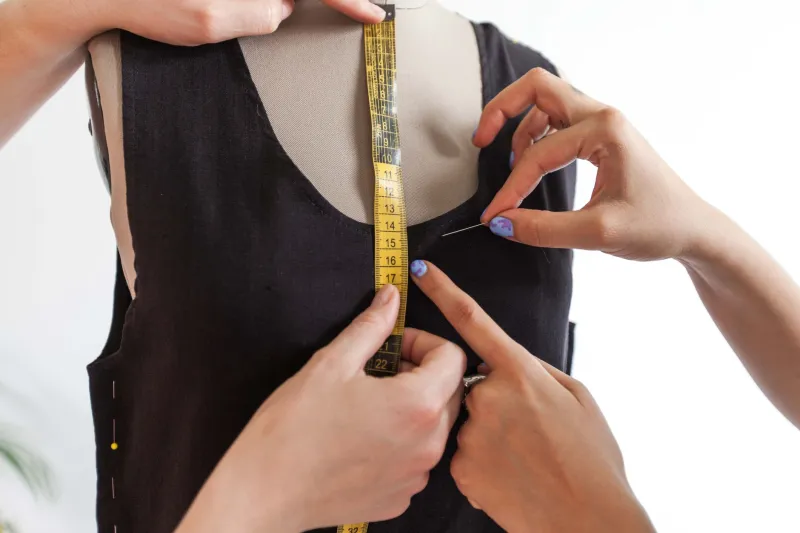
The Language of Touch: How Material Selection Defines a Designer's True Intent
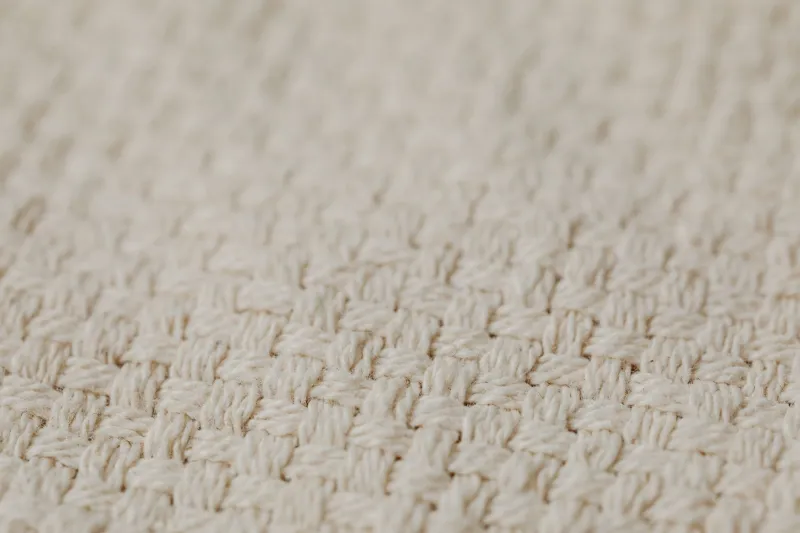
Before a garment is seen, it is felt — by the hands that construct it, by the body that wears it, and by the values that guided its creation. Fabric selection is among the most consequential decisions a designer makes, encoding information about ethics, craft, and identity into every thread. Understanding this language transforms how we evaluate, purchase, and ultimately inhabit the clothes we choose.
At Joan Design, we regard material sourcing not as a preliminary step in the design process, but as its philosophical foundation. What a fabric is made of, where it originates, how it behaves across time — these are not technical footnotes. They are the first sentences of every garment's story.
Why Fabric Choice Is a Design Statement
Conventional fashion discourse tends to privilege the visual: the silhouette, the color, the surface pattern. These are, of course, meaningful. But they operate at the level of appearance. Fabric operates at the level of experience — and, increasingly, at the level of ethics.
When a designer selects a material, they are making a series of interconnected decisions that extend far beyond aesthetics. They are choosing a supply chain. They are endorsing a set of agricultural or manufacturing practices. They are making a claim about what quality means and what longevity looks like. And they are, in the most literal sense, determining how a garment will feel against the skin of the person who wears it.
For the contemporary American consumer — increasingly attuned to the provenance of what they buy, whether food, furniture, or fashion — these decisions carry weight. Fabric is where intention becomes tangible.
The Vocabulary of Sustainable Fibers
The landscape of sustainable textiles has expanded considerably over the past decade, offering designers a far richer vocabulary than the binary of conventional cotton versus synthetic alternatives once suggested.
Organic and regenerative cotton remains a cornerstone of responsible sourcing. Grown without synthetic pesticides and increasingly cultivated using regenerative agricultural methods that restore soil health, this fiber carries a meaningful distinction from its conventional counterpart — one that is legible not just in environmental terms, but in the quality of the finished cloth.
Linen, derived from flax, is among the most ancient of natural fibers and among the most quietly sustainable. It requires minimal water and pesticide input relative to other crops, and its characteristic texture — cool, slightly structured, softening beautifully with wear — is a physical record of its agricultural origins.
Responsible wool, sourced from certified farms that prioritize animal welfare and land stewardship, offers warmth, resilience, and a natural breathability that synthetic alternatives have never fully replicated. The hand of a well-sourced merino or Rambouillet fleece communicates quality in a way that is immediately and unmistakably legible.
Tencel and lyocell, produced from sustainably managed wood pulp in a closed-loop process that recaptures solvents for reuse, represent one of the more compelling innovations in contemporary textile production. Their drape is exceptional — fluid and refined in a manner that reads as luxury without the ethical complexity of certain conventional luxury fibers.
Each of these materials tells a story. The question is whether the designer has chosen to tell it intentionally.
Heritage Textiles and the Weight of Provenance
Beyond the category of sustainable innovation lies an equally compelling territory: heritage textiles, whose value derives not from novelty but from continuity.
American selvedge denim, woven on vintage shuttle looms in small mills across North Carolina and California, carries within its tight weave a history of domestic manufacturing, of craft preserved against considerable economic pressure. Japanese cotton shirting, developed through generations of refinement by mills in the Bingo and Enshu regions, embodies a standard of consistency and beauty that no accelerated production process has managed to approximate.
Scottish Harris Tweed, hand-woven in the Outer Hebrides and protected by its own Act of Parliament, is perhaps the most literal example of fabric as narrative — each bolt traceable to a specific weaver, a specific island, a specific tradition of making.
When these materials appear in a contemporary garment, they bring their histories with them. The designer who chooses them is not simply selecting a cloth; they are entering into a relationship with a lineage of craft. For the wearer, that relationship is transferred — quietly, through touch.
The Psychology of Tactile Luxury
There is a reason that the language of fabric quality is so frequently physical. We speak of a cloth that has "substance," of a finish that feels "honest," of a fiber that communicates "warmth" in both the thermal and emotional sense. This is not metaphor for its own sake. It reflects something genuine about how we process material quality.
Research in consumer psychology has consistently demonstrated that tactile experience shapes perception of value in ways that visual cues alone do not. A garment that feels considered — that has weight where weight is appropriate, softness where softness is warranted, structure where structure serves — registers as more valuable even before its price is known.
This has significant implications for how designers approach material selection and for how consumers approach acquisition. The garment that rewards handling, that improves with wear, that develops what textile specialists call a "patina" over time — this is the garment that justifies investment. It is also, not coincidentally, the garment that generates the least waste.
Material Sourcing as Brand Identity
For a design studio committed to a coherent creative vision, fabric sourcing is among the most powerful tools of brand differentiation available. The materials a brand consistently chooses communicate values as clearly as any written statement of intent.
At Joan Design, our sourcing decisions are made with this understanding at the forefront. We seek fabrics that hold their integrity across seasons — not because we are indifferent to the evolution of our collections, but because we believe that a well-made garment in an enduring material is the most complete expression of our design philosophy. Clothing that lasts is clothing that was designed with honesty.
This approach resonates with a growing segment of American consumers who have grown skeptical of the disposable — who are seeking, in their clothing as in other areas of their lives, things made to mean something.
Learning to Read the Material
For those seeking to develop a more literate relationship with their own wardrobes, fabric education is an invaluable starting point. Learning to distinguish a tightly woven natural fiber from a loosely spun synthetic, to recognize the hand of quality wool versus its imitation, to understand why a well-finished seam on a linen shirt looks different from a poorly finished one — this knowledge transforms the act of shopping from a visual exercise into a genuinely informed practice.
It also changes what one notices in a finished garment. The drape of a well-cut dress in a quality crepe, the way a structured cotton blazer holds its shape through a full day of wear, the softness of a merino knit that only deepens after washing — these are the details that distinguish clothing from costume, investment from expenditure.
Fabric is the first word in a garment's story. Learning to read it is the beginning of dressing with true intention.