Starting From Zero: A Designer's Framework for Rebuilding Your Wardrobe After a Life Shift
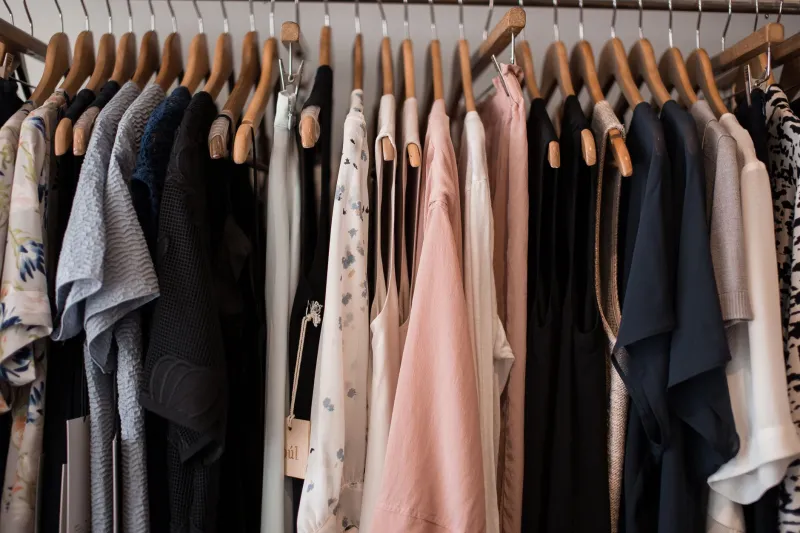
There are moments in a life when the closet stops making sense. Not in the small, daily way — the mild frustration of having nothing to wear despite a full rack — but in a more fundamental way. The clothes are there, but they belong to someone else: the person you were before the promotion, before the move from Austin to New York, before the version of yourself that no longer exists.
These moments of wholesale wardrobe obsolescence are more common than fashion culture typically acknowledges. The industry is well-equipped to discuss incremental curation — the capsule wardrobe, the thoughtful addition, the seasonal edit — but far less practiced at addressing what happens when the entire foundation requires replacement. When the work is not refinement but reconstruction.
Approaching that reconstruction with the same rigor a designer brings to building a collection from the ground up is not only possible — it is the approach most likely to produce a wardrobe that genuinely serves the life you are moving into, rather than the one you are leaving behind.
The First Step Is Not Shopping
The instinct, when faced with a depleted or irrelevant wardrobe, is to shop. This instinct is understandable and almost always counterproductive. Shopping without a prior framework produces a closet full of individual pieces that may each be attractive in isolation but fail to cohere as a system.
The first step in rebuilding a wardrobe after a significant life shift is assessment — and the subject of that assessment is not the current contents of your closet but the contours of the life you are now living or preparing to live.
Begin with the concrete. What does a typical week in this new life actually require? If you have moved from a creative agency environment in Los Angeles to a financial services role in Chicago, the practical demands of your wardrobe have changed dramatically. If you have left a corporate environment to work independently from home, they have changed in the opposite direction. The wardrobe that serves you now must be built around the life that actually exists, not the life that used to exist or the life you imagine you might eventually have.
This is where many people make their most costly mistake: building a wardrobe for an aspirational version of their life rather than the actual one. Aspirational dressing has its place, but it must be grounded in honesty about how you spend your days.
Defining Your New Design Brief
In a professional design context, every collection begins with a brief — a set of parameters that define the work before any material decisions are made. The brief addresses audience, occasion, aesthetic direction, and functional requirements. Rebuilding a personal wardrobe benefits from exactly the same kind of structured thinking.
Your personal design brief should answer four questions:
Who are you dressing for, and in what contexts? List the primary environments of your new life — workplace, social, domestic, active — and assign a rough percentage of your time to each. This distribution should directly inform the proportion of your wardrobe dedicated to each category.
What visual identity do you want to project? This is not about trend or aspiration but about the qualities you want your appearance to communicate. Authoritative. Approachable. Creative. Precise. Unhurried. Choose two or three adjectives and hold them as a filter against every purchase decision that follows.
What are your non-negotiable functional requirements? Climate, commute, physical demands, and dress codes all impose real constraints. A wardrobe that ignores these constraints in favor of aesthetic preference will fail in practice regardless of how beautifully it is conceived.
What is your investment capacity? Rebuilding a wardrobe from scratch is a significant financial undertaking, and approaching it with a clear budget prevents the kind of reactive spending that produces incoherent results. A smaller number of well-chosen, higher-quality pieces will always outperform a larger number of compromise acquisitions.
The Architecture of a Rebuilt Wardrobe
Once the brief is defined, the work of construction can begin. A rebuilt wardrobe, like a well-designed collection, requires a clear structural hierarchy: foundation pieces, working pieces, and expressive pieces.
Foundation pieces are the load-bearing elements — the items that appear in the greatest number of outfit combinations and that define the overall character of the wardrobe. These should be acquired first and with the greatest care, because every subsequent piece will need to relate to them. For most American professional contexts, foundation pieces include two to three well-tailored trousers or skirts, a structured blazer or coat, and two to three versatile tops in the dominant color of the chosen palette.
Working pieces are the items that carry the wardrobe through the majority of its daily use — the pieces that are worn most frequently and must therefore be both durable and genuinely satisfying to wear. Working pieces should be chosen for their relationship to the foundation rather than their independent appeal.
Expressive pieces are the elements that introduce personality, texture, and visual interest. These are acquired last, after the foundation and working layers are established, because their function is to articulate the wardrobe's character rather than define its structure. Acquired in the wrong order — as many impulse shoppers discover — expressive pieces become orphans: interesting on their own, incompatible with everything around them.
The Pace of Reconstruction
One of the most important practical considerations in wardrobe reconstruction is time. The temptation to resolve the problem immediately — to replace everything at once and arrive at a finished wardrobe in a single weekend — is one of the most reliable paths to a closet full of regrettable decisions.
A thoughtful rebuild takes months, not days. Foundation pieces require the most careful evaluation and should be acquired with patience: tried on multiple times, worn in the store if possible, considered in relation to the pieces already in the wardrobe. Working pieces can be acquired more efficiently once the foundation is in place. Expressive pieces should be allowed to accumulate slowly, through genuine encounters rather than deliberate searches.
This pace is not inefficiency. It is the process by which a wardrobe develops genuine coherence — not the false coherence of a single shopping trip, but the organic coherence of a system that has been allowed to find its own logic over time.
The Wardrobe as a Designed Object
At Joan Design, the conviction that clothing is a form of design — that it communicates, structures, and expresses — extends naturally to the wardrobe as a whole. A wardrobe is not a collection of individual items. It is a system, and like all systems, it functions best when it has been conceived with clarity, built with intention, and maintained with discipline.
The moments when life demands that we rebuild from the ground up are, in this light, not losses but opportunities. The opportunity to bring a designer's rigor to the most personal design problem most of us will ever face: the question of how we want to appear in the world, and what we want that appearance to say.