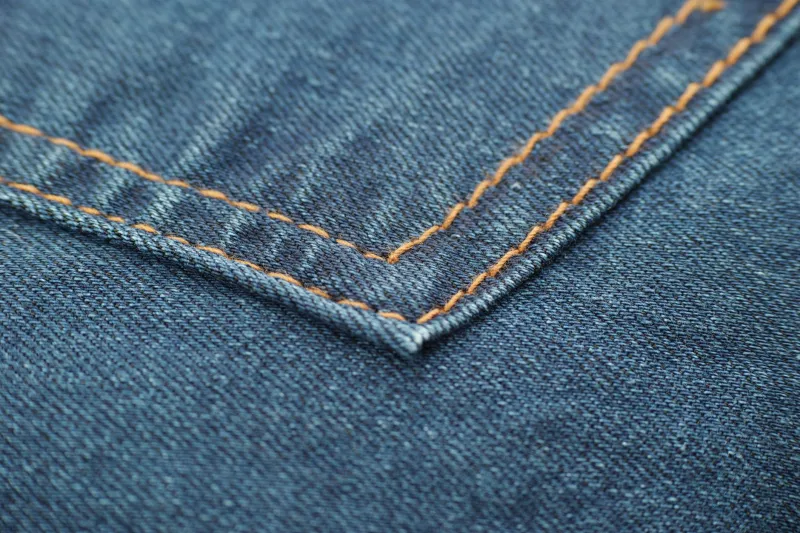
Same Pieces, New Conversations: The Art of Wearing Less to Express More

Photo by Photo by Nick Noel on Unsplash on Unsplash
There is a particular kind of confidence that emerges when a person wears the same coat three times in a single week — and each time, it reads entirely differently. Not because the coat has changed, but because the wearer has learned to speak its language. This is the quiet genius behind what serious designers have long understood: repetition is not a limitation. It is a compositional tool.
In a culture that has long equated variety with vitality, the idea of returning to the same garments again and again can feel counterintuitive. American fashion culture, in particular, has historically rewarded novelty — the new arrival, the seasonal refresh, the outfit worn once and retired. But a growing movement in contemporary design is pushing back against that instinct, arguing that true creative fluency comes not from accumulating more, but from mastering what you already own.
The Gallery Principle
Consider how a museum curator approaches a permanent collection. The works do not change, but the relationships between them are constantly reconsidered — repositioned, relit, recontextualized. A painting that anchors one exhibition becomes a counterpoint in the next. The art remains constant; the meaning evolves.
A well-designed wardrobe operates on the same logic. When a tapered trouser in charcoal wool is paired with an oversized linen shirt, it reads as studied minimalism. Swap that shirt for a fitted ribbed turtleneck and the same trouser becomes something more architectural, more severe. Add a fluid bias-cut slip layer beneath a structured blazer and suddenly the trouser is participating in a conversation about tension and softness simultaneously. The garment has not moved. The composition has.
This is what designers mean when they speak about building pieces with relational intelligence — garments engineered not just to stand alone, but to activate other garments around them. The best capsule pieces are, in this sense, less like finished statements and more like open questions.
Constraint as Creative Catalyst
The fashion industry has long romanticized the idea of the creative limitation. Designers working with restricted fabric budgets, production constraints, or narrow color palettes frequently produce work of greater coherence and intention than those operating without guardrails. The same principle applies to personal dressing.
When you remove the option of simply reaching for something new, you are forced to look more carefully at what exists. You begin to notice that the slightly boxy cut of a particular jacket creates an interesting dialogue with the high waist of a certain skirt. You discover that a piece you once considered too formal becomes unexpectedly wearable when layered beneath something deliberately casual. These discoveries do not happen when the closet is crowded with alternatives.
Styling professionals who work with editorial clients often describe a similar phenomenon: the most compelling looks rarely emerge from abundance. They emerge from the productive friction of working with a defined set of pieces and refusing to default to the obvious combination.
Engineering the Remix
For those approaching this practice with intention, a few structural principles are worth considering.
First, invest in pieces with what might be called tonal neutrality — garments that carry enough visual weight to anchor a look without dominating it. A beautifully constructed pair of wide-leg trousers in a muted earth tone, for instance, can serve as the foundation for a dozen distinct compositions. Its very restraint is what makes it generative.
Second, think in terms of proportion ratios rather than outfit formulas. Contemporary designers frequently build collections around a deliberate push and pull between volume and structure — a voluminous top balanced by a narrow base, or a cropped silhouette that creates space for layering beneath. When you internalize these ratios, you stop thinking in fixed combinations and start thinking in visual relationships.
Third, resist the impulse to resolve every outfit into something comfortable and familiar. The most interesting combinations often live at the edge of coherence — where two pieces seem to be in productive disagreement rather than easy harmony. That tension is not a problem to be solved. It is frequently the most interesting thing about the look.
The Signature as Practice
One of the most consistent observations about designers and artists known for their personal style is that they tend to wear a remarkably small number of pieces. This is rarely about frugality. It is about the development of a signature — a recognizable visual language that becomes more refined through repetition rather than less.
When a designer returns to the same silhouettes, the same tonal relationships, the same material weights across multiple seasons, they are not running out of ideas. They are deepening a conversation. The viewer begins to understand the vocabulary. The choices become legible as intention rather than habit.
This is the aspiration behind the most thoughtful approach to personal dressing: not to produce a different look each day, but to develop a point of view that grows more articulate over time. The wardrobe becomes less like a costume department and more like a working studio — a space of ongoing refinement, where each new combination builds on the last.
Wearing With Conviction
Ultimately, the remix principle asks something more demanding than simply buying fewer clothes. It asks for genuine engagement with what you own — a willingness to look carefully, to experiment without a net, and to trust that a garment worn with full commitment will always read more powerfully than something new worn without conviction.
The designers who build the most enduring personal aesthetics are not those with the largest wardrobes. They are the ones who have learned to return to the same pieces with fresh eyes, finding in each repetition not monotony, but a new question worth answering.