Dressed by Design: The Art and Logic of Building a Personal Uniform
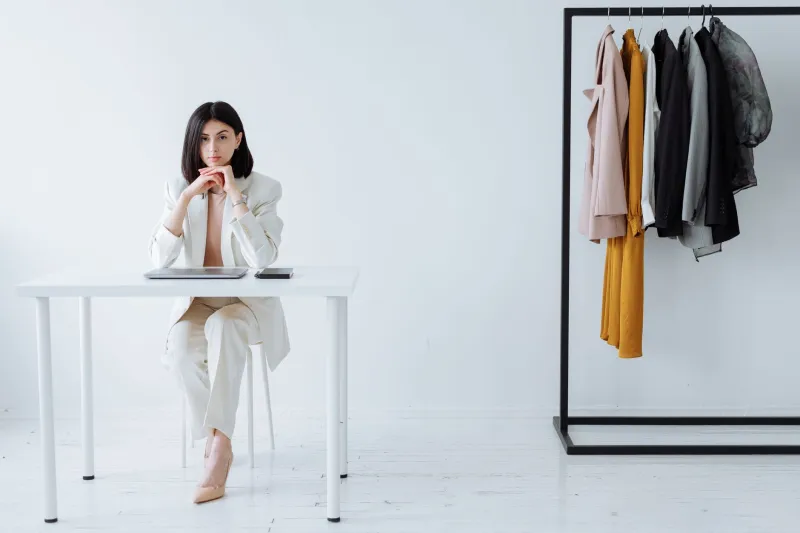
The most deliberate wardrobes often appear, at first glance, to be the simplest. Across creative industries and executive circles alike, a quiet revolution is underway — one built not on variety, but on repetition refined to its most intentional form. This is the philosophy of the personal uniform, and it may represent contemporary fashion's most sophisticated statement.
At Joan Design, we have long held that clothing communicates before words do. What the personal uniform communicates, above all else, is clarity — of purpose, of identity, and of values.
The Paradox at the Center of It All
There is an inherent tension in the idea of a fashion uniform. Fashion, as a cultural institution, is animated by change, by novelty, by the seasonal rotation of ideas. And yet some of the most visually compelling individuals in American creative and professional life have arrived at the same quiet conclusion: that the deliberate repetition of a refined silhouette is not a retreat from fashion but an advancement of it.
The paradox is this — in choosing to wear the same thing, these individuals become more recognizable, not less. Their visual signature sharpens. Their presence in a room becomes legible, consistent, and in many ways, authoritative. The uniform does not erase the self; it distills it.
This is not a new phenomenon. Figures in design, technology, and the arts have famously adopted near-identical daily dress — not out of disinterest in clothing, but out of profound interest in what clothing accomplishes. When the decision is made once, and made well, it ceases to be a daily negotiation and becomes instead a permanent statement.
What Creatives and Professionals Are Actually Saying
Architects, art directors, and brand strategists across the United States have quietly embraced this approach with increasing conviction. The reasoning, when articulated, is remarkably consistent.
"I stopped thinking about my closet as a collection of options and started thinking of it as a system," shared one New York-based brand identity designer who has worn variations of the same structured trouser and relaxed knit for the better part of three years. "What I wear now never distracts from what I do. It supports it."
A Los Angeles-based creative director offered a similarly pragmatic perspective: "When your aesthetic is already established, your clothing becomes an extension of your portfolio. I wear the same palette, the same cuts. People know what to expect from me — and that's exactly the point."
For many in high-output professional environments, the cognitive bandwidth reclaimed by eliminating daily wardrobe decisions is itself a form of luxury. But the uniform philosophy is not merely about efficiency. At its most refined, it is about intentionality — about choosing every element of one's presentation with the same deliberateness a designer brings to a garment's construction.
The Design Principles Behind a Functional Uniform
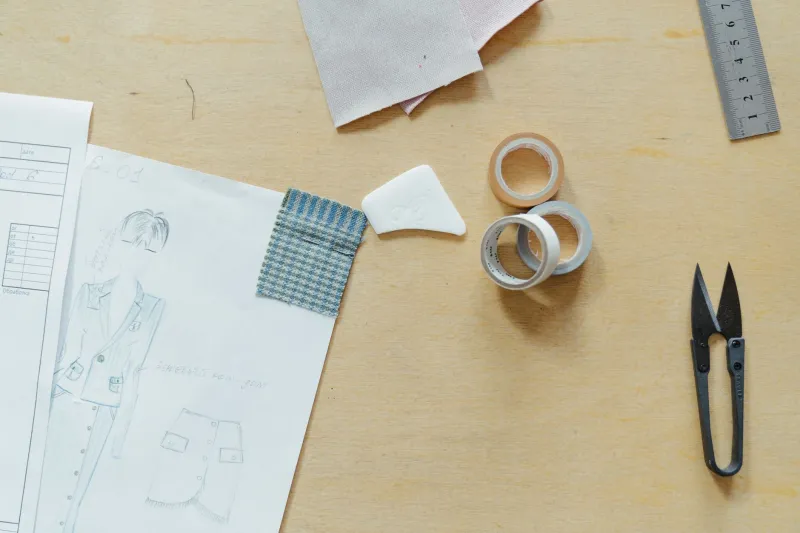
Building a personal uniform is, in essence, a design exercise. It requires the same rigor one would apply to any considered creative project: research, editing, and a willingness to prioritize function alongside form.
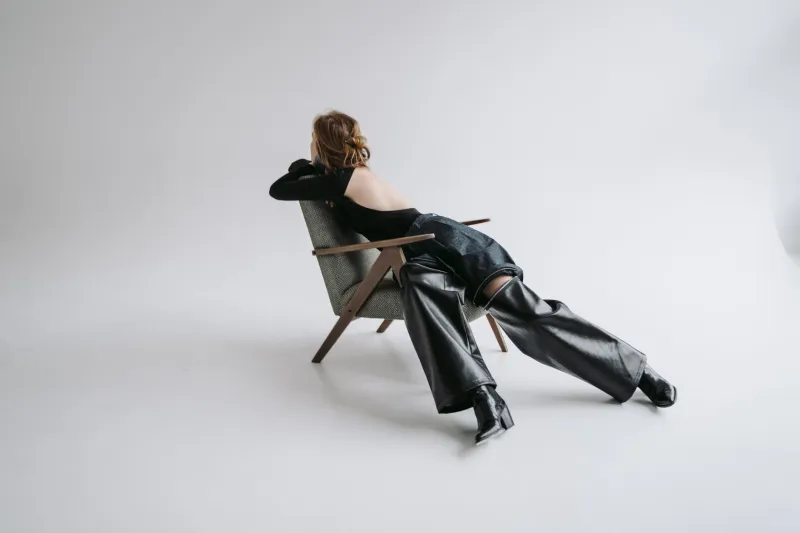
Begin with silhouette. The foundation of any effective uniform is a shape that works across contexts. Clean-lined trousers, a well-proportioned blazer, or a precisely cut dress — whatever the anchor piece, it should be versatile enough to carry the full weight of your daily presentation without modification.
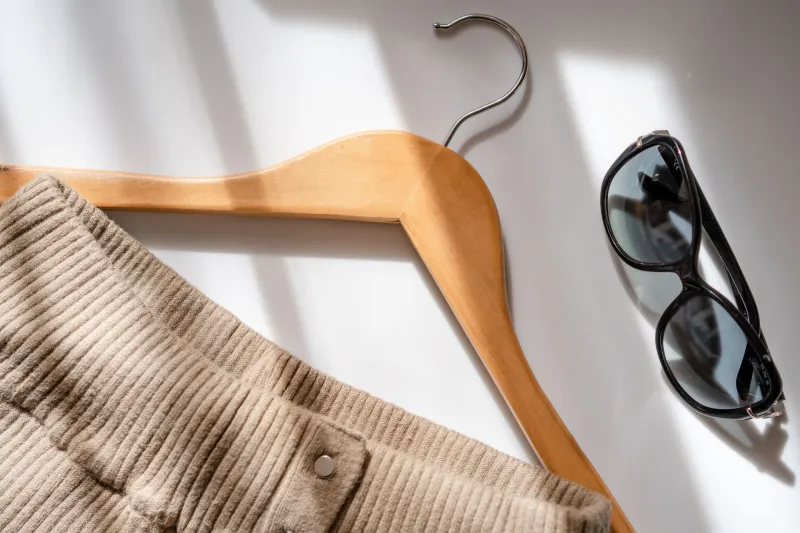
Commit to a material standard. Fabric is not an afterthought. In a uniform wardrobe, where pieces are worn with high frequency, quality of material becomes non-negotiable. Fine merino, structured cotton twill, or a well-woven linen will hold their form and their dignity across repeated wear in a way that lesser fabrics simply will not.
Establish a color logic. The most cohesive personal uniforms operate within a deliberately narrow palette — often two or three tones that relate to one another harmoniously. This is not a limitation. It is a framework that allows each piece to function interchangeably, creating a wardrobe that is, in the truest sense, curated.
Invest in multiples. The uniform only functions when it is available. Owning two or three versions of a foundational piece — in the same or closely related colorways — ensures that the system is never disrupted by the ordinary rhythms of life.
Edit without mercy. Anything that does not serve the established system should be removed. The personal uniform is not a capsule wardrobe in the conventional sense; it is something more precise. It asks that every piece earn its place through consistent use and clear alignment with the whole.
Visual Consistency as a Form of Brand Clarity
In the contemporary professional landscape, personal branding is no longer the exclusive domain of marketers and public figures. Every individual who operates within a creative or client-facing context is, to some degree, managing a visual identity. The personal uniform is one of the most effective tools available for doing so with coherence.
When your clothing is consistent, your presence becomes legible across contexts — whether you are presenting to a client, appearing in a photograph, or simply moving through the professional world. This consistency is not rigidity. It is, in fact, a form of confidence that others register instinctively.
At Joan Design, we design with this principle in mind. Our collections are built around pieces that reward repetition — garments with the structural integrity and material quality to be worn often, and the quiet elegance to remain compelling each time they are. We believe that clothing designed to be worn once is, in a meaningful sense, not fully designed at all.
The Deeper Statement
Perhaps what the personal uniform ultimately communicates is this: that the person wearing it has already done the work. The choices have been made. The values have been established. What remains is simply the business of living — fully, and without distraction.
In a culture that frequently equates abundance with success, there is something quietly radical about choosing less. About deciding that one excellent thing, worn with conviction, says more than a wardrobe full of options ever could.
That is the uniform paradox resolved: not through contradiction, but through design.