When Less Costs More: The Craftsmanship Imperative Behind the Modern Capsule Collection
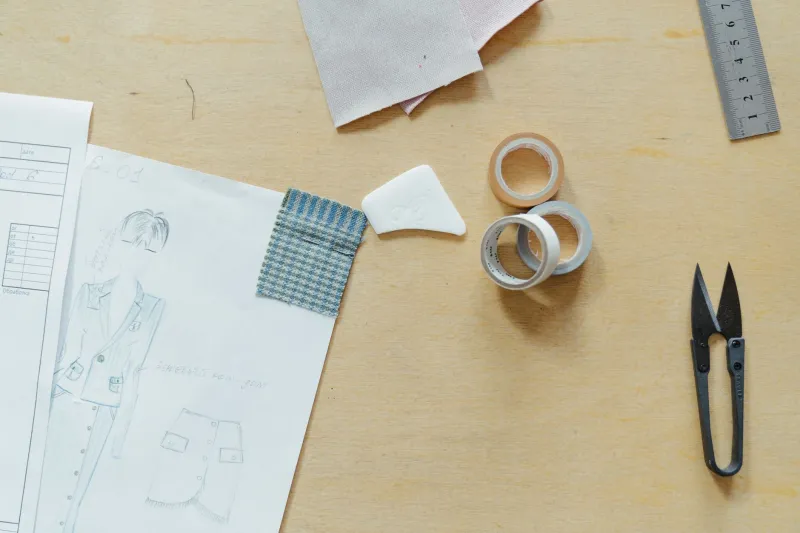
There is a quiet paradox embedded in the capsule wardrobe movement. The very act of choosing fewer garments — of editing a closet down to its most essential, most versatile components — places an extraordinary burden of expectation on each piece that remains. A wardrobe of thirty garments can absorb a mediocre blazer. A wardrobe of twelve cannot. This is the tension that defines contemporary fashion design at its most serious level: minimalism does not simplify the designer's task. It amplifies it.
At Joan Design, we have observed this shift with considerable interest. The American consumer is increasingly discerning, not because trends have dictated it, but because economic and environmental consciousness have converged to create a new standard of value. That standard is rooted in craftsmanship — and it is reshaping how collections are conceived, constructed, and priced.
The Weight of a Single Choice
Consider the role a well-constructed coat plays in a capsule wardrobe. It must move between professional settings and weekend occasions. It must hold its structure after dozens of dry-cleaning cycles. Its lining must breathe, its buttons must remain anchored, and its silhouette must feel as intentional in year three as it did on day one. That is not a coat — that is an architectural achievement.
This is precisely why the capsule philosophy demands a different kind of design conversation. When a garment is purchased as an investment rather than an impulse, the consumer's scrutiny extends well beyond surface aesthetics. They are asking questions that were once reserved for tailors and textile specialists: Where was this fabric milled? How are the seams finished? Will this construction hold under genuine, sustained use?
These are the right questions. And they are questions that reward designers who have never taken shortcuts.
Fabric Sourcing as a Design Decision
At the foundation of any garment worthy of a capsule collection is the textile itself. Fabric selection is not merely a material choice — it is a philosophical one. A fabric that pills after six months of wear, regardless of how elegantly it drapes on a hanger, ultimately fails the consumer who has placed their trust in it as a wardrobe cornerstone.
The sourcing process at a studio committed to investment-level design begins long before a single pattern is cut. It involves understanding fiber origins, weave density, dye permanence, and how a fabric responds to the specific stress points of its intended silhouette. A fine-gauge merino wool behaves differently than a mid-weight Italian wool crepe, and that difference matters enormously when a single coat or trouser is expected to perform across seasons and settings.
This level of textile intelligence is not incidental to the design process — it is inseparable from it.
Finishing Techniques and the Details That Endure
If fabric selection forms the foundation, finishing techniques are the architecture that determines longevity. Interior construction — the elements a customer rarely sees but always feels — separates garments that age gracefully from those that deteriorate quietly and quickly.
Flat-felled seams, bound buttonholes, and hand-stitched hems are not affectations of an earlier era. They are structural choices that distribute stress more evenly across a garment, reducing the likelihood of separation or distortion over time. French seams on fine blouses prevent fraying that would otherwise compromise the garment's interior integrity after repeated laundering. These details cost more to execute. They require more time, more skill, and a deeper commitment from the production team. But in the context of a capsule wardrobe — where each garment must justify its place through years of reliable performance — they are not luxuries. They are requirements.
Pricing Honesty in an Investment-Driven Market
The capsule wardrobe conversation has also forced a more transparent dialogue around pricing. American consumers, increasingly educated about supply chains and production costs, are growing more comfortable with the concept of paying more for less — provided the value proposition is clearly articulated and genuinely delivered.
This represents a meaningful shift from the fast-fashion era, when volume and price point were the primary metrics of consumer satisfaction. Today, a thoughtful buyer approaching a capsule collection asks a different question: not "How much does this cost?" but "What is this worth over time?"
Designers who answer that question honestly — through transparent communication about materials, construction standards, and production ethics — are building something more durable than a seasonal trend. They are building trust.
The Designer's Responsibility in a Minimal Wardrobe World
The capsule wardrobe movement has, in many ways, elevated the designer's responsibility to its highest possible level. When a consumer selects a piece for their edited collection, they are extending a form of confidence that extends far beyond aesthetic approval. They are saying: I believe this will last. I believe this will adapt. I believe this is worth the space it occupies in my life.
At Joan Design, that confidence is not taken lightly. It informs every stage of the design process — from the initial concept sketches to the final quality review before a piece reaches a customer's hands. The philosophy of doing less, but doing it exceptionally well, is not a marketing position. It is a commitment that shapes every decision made within the studio.
The capsule paradox, then, resolves itself rather elegantly: fewer pieces do not mean less work. They mean better work. And that distinction is precisely what contemporary design, at its most refined, is built upon.