Architect Your Presence: A Designer's Framework for Discovering and Owning Your Personal Silhouette
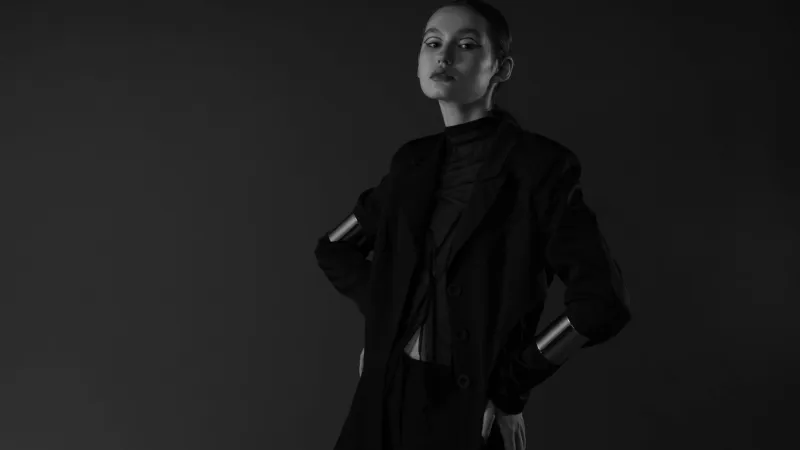
A silhouette is the first thing a garment communicates. Before color registers, before fabric quality is assessed, before the eye can locate a single seam, the overall shape of a dressed figure has already made its statement. Professional fashion designers understand this with a precision that shapes every decision they make from the first sketch forward. What is less commonly understood is that this same precision is available to anyone willing to apply it to their own wardrobe.
Developing a personal silhouette—one that is genuinely yours, consistent across seasons, and recognizable across contexts—is not a project reserved for fashion insiders. It is, at its core, a design problem. And design problems respond to design thinking.
Why Trends Cannot Give You a Silhouette
The fundamental limitation of trend-based dressing is that trends are designed to be universal. They are propositions made to an aggregate, not a person. When you adopt a trending silhouette wholesale, you are wearing someone else's answer to a question they were not asking about you.
This is not an argument against trends as a source of inspiration. Contemporary fashion produces genuinely interesting formal ideas every season, and a thoughtful dresser can extract useful information from runway collections without surrendering their own direction to them. The distinction is between observing trends as data and following them as instructions.
A personal silhouette, by contrast, is specific. It reflects your actual proportions, your habitual posture, the way you move through your particular life, and the impression you have decided—consciously or not—to make on the people in your world. Trends cannot supply any of that information. Only you have access to it.
Step One: Study Your Body as a Designer Would
Fashion designers do not begin with a garment. They begin with a form. Before any fabric is cut, the body that will wear the finished piece is understood in terms of its architecture: the relationship between shoulder width and hip width, the length of the torso relative to the leg, the natural slope of the shoulder, the way weight is distributed in a standing position.
You can apply this same analytical lens to yourself without any technical training. Stand in front of a full-length mirror in fitted, neutral clothing—not to assess attractiveness, but to observe geometry. Where are your widest points? Where is your natural waist in relation to your hips? How does your shoulder line behave—does it slope or sit level? How long is your neck relative to your shoulders?
These are not judgments. They are measurements of a form you are about to design for. A studio designer working with these proportions would use them to determine where seams should fall, where volume can be introduced, and where the silhouette needs to be simplified. You are doing the same work.
Step Two: Map Your Movement
Silhouette is not static. A garment that reads beautifully on a dress form may tell an entirely different story when the wearer sits down, reaches across a table, or climbs a flight of stairs. The way fabric moves with—or against—your body is a critical component of your personal silhouette that most style advice ignores entirely.
Spend one week paying deliberate attention to how you move. Not how you wish you moved, but how you actually do. Do you tend to sit with your legs crossed or extended? Do you carry bags on one shoulder consistently? Do you lean forward when you speak, or hold yourself upright? Do you prefer to walk quickly, or do you move with deliberate pace?
Each of these habits has implications for what silhouettes will serve you. Someone who moves quickly and leans forward will find that structured, stiff silhouettes fight their natural energy. Someone who sits for long hours needs to understand how their chosen trouser rises and seat constructions behave under those conditions. Movement mapping is not about restriction—it is about choosing garments that cooperate with your actual body in motion.
Step Three: Identify Your Recurring Proportional Instincts
Most people, if they look honestly at their wardrobe history, have made the same proportional choices repeatedly—often without realizing it. They have always been drawn to a longer top layer. They consistently reach for a cropped silhouette in warm weather. They have never once worn a garment that hit at the widest point of their hip and felt comfortable.
These instincts are data. They are not accidents or arbitrary preferences. They reflect a body-level understanding of what proportions work for your particular form and movement style. The exercise here is to excavate those patterns deliberately.
Pull out the garments you wear most frequently and lay them side by side. Look at where each one hits your body—the hem, the waistline, the shoulder. Look at the volume distribution: where is fabric gathered, where is it fitted? You will almost certainly find a consistent set of proportional preferences that, once identified, can be applied intentionally to every future purchase.
Step Four: Define Your Silhouette in Three Lines
Professional designers, when developing a collection, often articulate their silhouette direction in extremely compressed terms before any sketching begins. The discipline of compression forces clarity. Try applying the same exercise to your personal aesthetic.
Describe your ideal silhouette in three statements. They should address proportion (where is volume, where is structure), scale (how does the garment relate to your body size), and movement (how does the silhouette behave in motion). For example: volume at the shoulder, fitted through the hip; longer than the body expects; structured but not rigid.
These three lines become your editorial filter. When you encounter a new garment—in a store, in a lookbook, on someone else—you can measure it against these statements quickly and accurately. Does this piece fit my silhouette language, or does it belong to someone else's?
Step Five: Allow the Silhouette to Evolve Without Abandoning It
A personal silhouette is not a uniform. It is a visual language, and languages grow. The silhouette you define today should have room to absorb new influences, respond to changes in your life and body, and become more precise over time.
The key is to distinguish between evolution and distraction. Evolution happens when a new element genuinely extends your established language—when a new proportion or material adds nuance to what you have already built. Distraction happens when a trend or a moment of impulse pulls you toward a silhouette that has nothing to do with your established direction.
Designers who maintain a coherent body of work across many years do so not by refusing to change, but by changing on their own terms. They know their language well enough to know when they are expanding it and when they are abandoning it. That same discernment, developed through the framework above, is what transforms a collection of clothes into a genuine personal aesthetic.
The Reward of the Recognizable
There is a particular quality of presence that comes from dressing with this level of intention. It is not loudness—a strong personal silhouette is often extremely quiet. It is coherence: the sense that the person in front of you has made a considered set of decisions about how they present themselves to the world, and those decisions have accumulated into something recognizable.
That recognizability is worth working toward. It signals self-knowledge. It communicates the kind of confidence that does not require external validation, because it is grounded in a clear understanding of one's own design language rather than borrowed from someone else's.