Against Accommodation: The Radical Case for Clothes That Challenge the Body

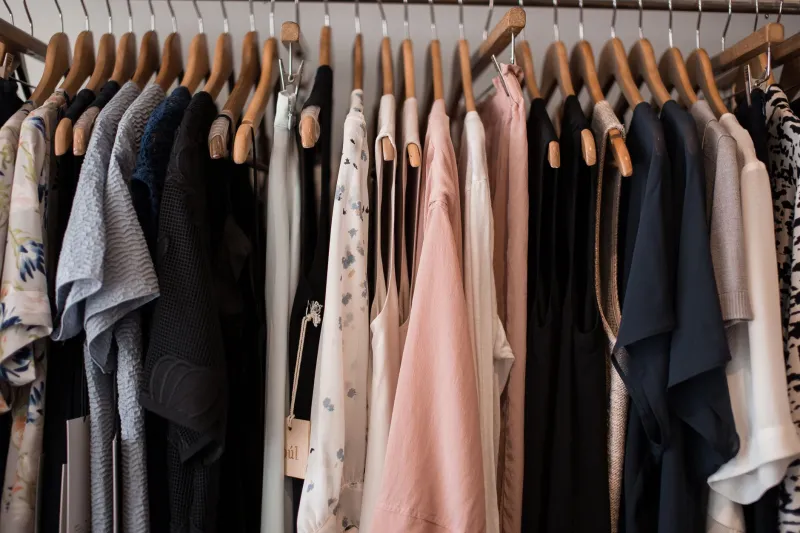
Photo by Photo by kevin laminto on Unsplash on Unsplash
At some point, American fashion culture decided that the highest compliment a garment could receive was that it felt like wearing nothing at all. Stretch fabrics engineered to disappear. Waistbands designed to forget they exist. Silhouettes so carefully calibrated to the body's natural contours that the garment itself becomes invisible. The ideal, as the prevailing logic goes, is total accommodation — clothes that ask nothing of the wearer and impose nothing on the body.
This is a reasonable ambition. It is also, in certain important respects, a deeply uncreative one.
The most consequential moments in twentieth-century fashion — the moments that genuinely altered how people understood their own bodies and their relationship to clothing — did not emerge from accommodation. They emerged from friction. From garments that imposed a shape, demanded a posture, or created a silhouette that the body had to negotiate rather than simply inhabit.
Fit as Argument
To understand why deliberate tension in a garment can be a form of design intelligence rather than a failure of craft, it helps to consider what fit is actually communicating.
A garment that fits in the conventional sense — that moves with the body, accommodates its proportions, and asks for no adjustment — is, at its core, a garment that defers to the body. It says: you are the primary fact here, and I will arrange myself around you. This is generous. It is often comfortable. And it is fundamentally reactive.
A garment that imposes a specific silhouette, that creates volume where the body does not, that nips or extends or elevates in ways the body would not naturally produce — this garment is making an argument. It says: there is a shape I am proposing, and I am inviting you into it. The wearer does not simply occupy the garment; they participate in its meaning.
This distinction matters enormously in the context of contemporary design. Designers who use fit as an expressive tool are not failing to solve a technical problem. They are solving a different problem entirely — one that has less to do with physical comfort and more to do with the transformation that clothing, at its most intentional, can produce.
The Productive Discomfort of Proportion
Some of the most discussed silhouettes in recent American fashion have been built on deliberate proportional disruption. An exaggerated shoulder that extends beyond the body's natural width creates a presence that cannot be achieved through conventional tailoring. A cropped jacket that ends precisely at the wrong place — not at the waist, not at the hip, but somewhere in between — forces the eye to reckon with the body differently. A trouser with a rise so high it restructures the entire torso creates a vertical line that would not otherwise exist.
None of these choices are comfortable in the conventional sense. All of them require the wearer to adapt — to stand differently, to move with more deliberateness, to be more conscious of their own physical presence. And that heightened consciousness is not an unfortunate side effect of interesting design. It is frequently the experience the designer was pursuing.
When a garment makes you aware of your body, it is doing something that comfortable clothing rarely achieves: it is making you present. It is insisting that you inhabit the moment of wearing it rather than moving through the day in a kind of sartorial amnesia.
Rebellion Dressed as Tailoring
The history of fashion is, in no small part, a history of garments that were considered unwearable until they weren't. The structured corsetry of the nineteenth century, the boxy Chanel suit that initially struck contemporaries as shapeless, the deconstructed tailoring of the 1980s avant-garde — each of these represented a challenge to the body that was initially received as a provocation and eventually absorbed as a new vocabulary of normalcy.
What this history suggests is that the boundary between discomfort and innovation is not fixed. It is a cultural threshold that moves as the eye adjusts and the body learns. A silhouette that feels imposing or strange in one decade becomes the reference point against which the next decade defines its own rebellion.
Contemporary designers who work in this tradition — who use unexpected proportions, unconventional structure, and deliberate fit tension as primary design tools — are not indifferent to the wearer's experience. They are, in fact, intensely focused on it. They are simply focused on a different dimension of experience than physical ease.
What American Dressers Stand to Gain
For a culture that has spent the better part of the last decade moving steadily toward athleisure, toward the erasure of the boundary between dressed and undressed, toward the valorization of comfort as the supreme clothing virtue, the idea of intentional fit tension may require some recalibration.
This is not a call to return to restrictive dressing or to dismiss the genuine liberation that comfortable, functional clothing has represented for many Americans. It is, rather, an invitation to expand the criteria by which we evaluate what clothing can do.
A garment that makes you feel something — that creates a physical awareness, that proposes a posture, that places you in a particular relationship with space and with the people around you — is offering an experience that the perfectly accommodating garment cannot. It is asking you to be a participant in its design rather than simply its beneficiary.
The Body as Collaborator
The most interesting contemporary designers working with fit as a conceptual tool tend to describe the relationship between garment and body not as one of service and recipient, but as one of collaboration. The clothes do not exist to disappear into the wearer. They exist to create something new in the encounter between the two.
This framing — the body as collaborator rather than client — has implications that extend well beyond the fitting room. It suggests a mode of dressing that is active rather than passive, engaged rather than comfortable, and ultimately more honest about what clothing has always been: not merely protection or modesty, but a practice of self-construction, carried out daily, one garment at a time.
Discomfort, in this light, is not a design failure. It is an invitation to pay attention — to the clothes, to the body, and to the conversation happening between them.