Clothes That Stay: Why Your Favorite Pieces Disappear With the Season and How Design Fixes That
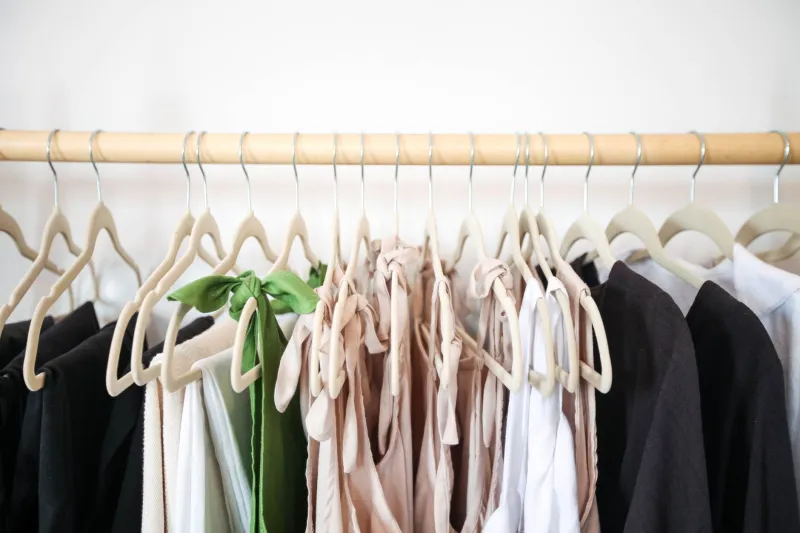
There is a particular frustration that arrives each time you reach for a garment you genuinely love and find yourself setting it aside. Not because it no longer fits. Not because it has worn through. But because something about it feels wrong for the current month, the current temperature, the current mood that the season carries. The piece is present in your closet, but it is somehow absent from your life.
This is the transition problem. And it is far more common — and more consequential — than most people recognize.
The Psychological Architecture of Seasonal Attachment
Clothing does not exist in isolation from memory. When you wear a linen shirt through a humid July, attend a rooftop gathering in it, feel the particular relief of its weight against your skin in the heat, that garment becomes encoded with those circumstances. The shirt and the summer become one object in the mind.
Psychologists who study embodied cognition have long noted that material objects serve as anchors for emotional states. Fashion operates within this framework constantly, even when neither the wearer nor the designer is thinking about it consciously. A camel-colored wool coat purchased in November carries the weight of that season — its darkness, its particular social rhythms, its interior quality of light — and resisting that association requires more deliberate effort than most people are prepared to give on an ordinary Tuesday morning in March.
The result is a closet full of beloved pieces that feel locked. Not broken, not discarded, simply inaccessible.
Why Design So Often Compounds the Problem
The fashion industry has, for decades, actively reinforced seasonal separation. Collections arrive with a distinct temperature in mind. Marketing imagery places garments in settings that are unambiguous about the time of year they are meant to occupy. A cashmere turtleneck photographed against bare trees in a gray New England landscape arrives pre-loaded with winter. A floral midi dress shot in afternoon sun on a Charleston street belongs, in the consumer's imagination, to late spring.
This is not accidental. Seasonal specificity has historically driven purchasing behavior. If a garment feels tied to one moment, the consumer requires a new garment for the next moment. The cycle continues.
But this approach creates a kind of design failure that is rarely named as such. When a piece cannot move with the person wearing it — when it cannot adapt to the shifting light of October or the unpredictable warmth of a February afternoon in Atlanta — it has been engineered for obsolescence, however unintentionally.
The Design Qualities That Allow a Garment to Travel
Contemporary designers who are thinking seriously about longevity approach the seasonal transition question with specific tools. These are not abstract principles. They manifest in concrete decisions at the pattern-making and material selection stages.
Weight and hand. Fabrics that occupy a middle register — neither aggressively insulating nor conspicuously lightweight — resist seasonal categorization. A medium-weight wool crepe reads as appropriate across a far wider band of the calendar than a heavy bouclé or a tissue-thin silk. The hand of the fabric, meaning the way it moves and drapes against the body, contributes as much to perceived seasonality as the fiber content itself.
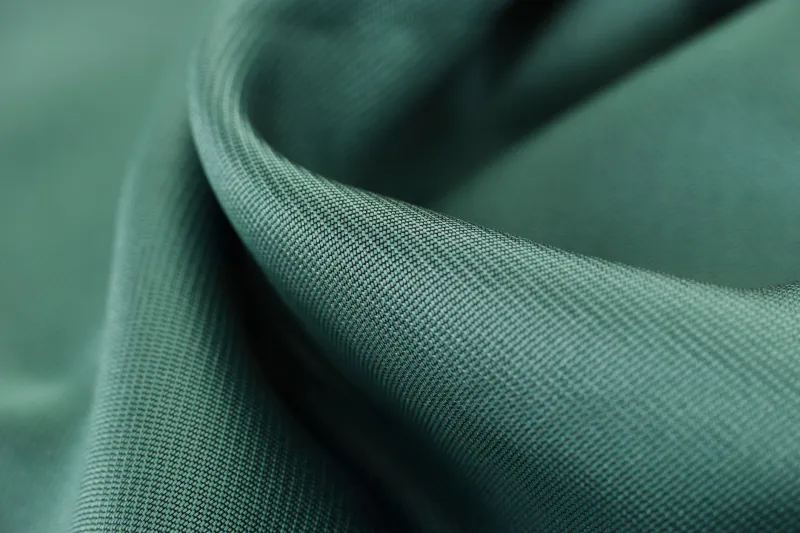
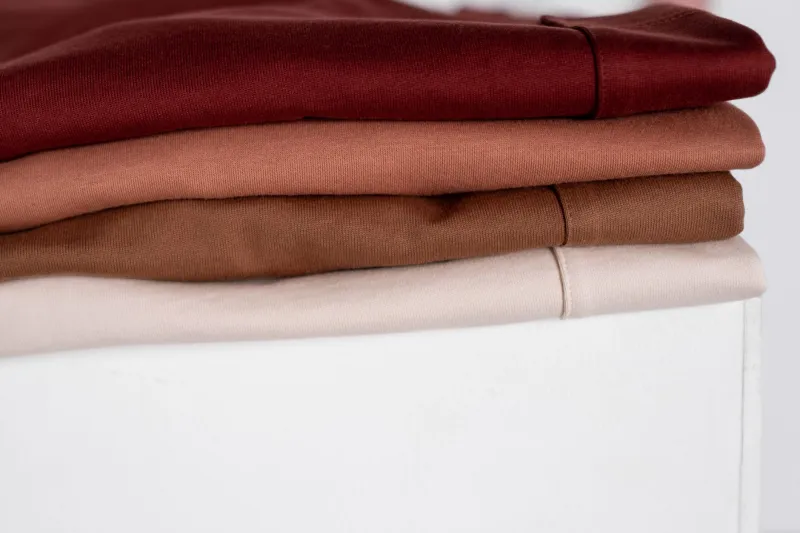
Color neutrality. This is not a mandate for beige. It is an observation that certain colors carry climatic associations so strongly that they limit a garment's psychological range. Bright coral summons summer almost involuntarily. Forest green, particularly in heavier textures, reads as autumn. Designers who work in more ambiguous tonal territory — warm slate, dusty ochre, off-white with gray undertones — create pieces that the wearer's mind does not automatically assign to a single season.
Structural restraint. Garments that rely on strong silhouette rather than seasonal surface detail tend to move more fluidly across the year. A perfectly cut trouser in a neutral medium-weight fabric does not announce its season. A trouser covered in embroidered autumnal motifs does. The former can be styled into spring, summer, fall, and winter with the right companions. The latter has a narrower window.
Layering logic. Pieces designed with layering in mind — those that function as a base, a middle layer, or an outer layer depending on what is placed above or beneath them — carry an inherent seasonal flexibility. A structured overshirt that works as a light jacket in September and as a mid-layer under a coat in January is not one garment but several, depending on the month.
The Practical Barrier: Habit and Ritual
Even when the design itself supports transition, the wearer's habits often do not. Most people rotate their wardrobes according to a binary logic: warm-weather clothes and cold-weather clothes, stored separately, retrieved in bulk at the change of season. This system is efficient but blunt. It removes garments from consideration entirely rather than asking whether they might function differently in a new context.
A linen blazer packed away in October because linen is a summer fabric will not be available in November, when layered over a fine merino turtleneck it might be exactly right. A silk slip dress stored with the spring clothes will not be reconsidered in winter, when worn over a long-sleeve fitted knit it becomes something else entirely.
The transition problem is, in part, a failure of imagination — but it is a failure that design can either encourage or correct. Pieces that are built to travel invite the wearer to think about them differently. Their ambiguity is a prompt.
Designing for the Full Year
At Joan Design, the question of seasonal longevity is not an afterthought. It is embedded in the earliest stages of the design process, in the selection of materials and the decisions about proportion that determine whether a garment will feel at home in only one chapter of the year or in all of them.
The goal is not to make clothing that ignores season. Season is real. Temperature is real. The particular quality of light in late September is genuinely different from the quality of light in late May, and clothing that is sensitive to those differences is clothing that is alive to the world. The goal is to make clothing that is not imprisoned by season — that can be carried forward, reinterpreted, and worn again without the wearer needing to override a strong emotional association with a moment already past.
The best pieces in any wardrobe are the ones that continue to be available. Not just physically present, but genuinely reachable — open to new combinations, new contexts, new versions of the person wearing them. That availability is not accidental. It is designed.
And it begins with understanding why, without that intention, even the most beloved garment tends to disappear.