What Fabric Knows About You: The Deeper Intelligence Behind Material Selection
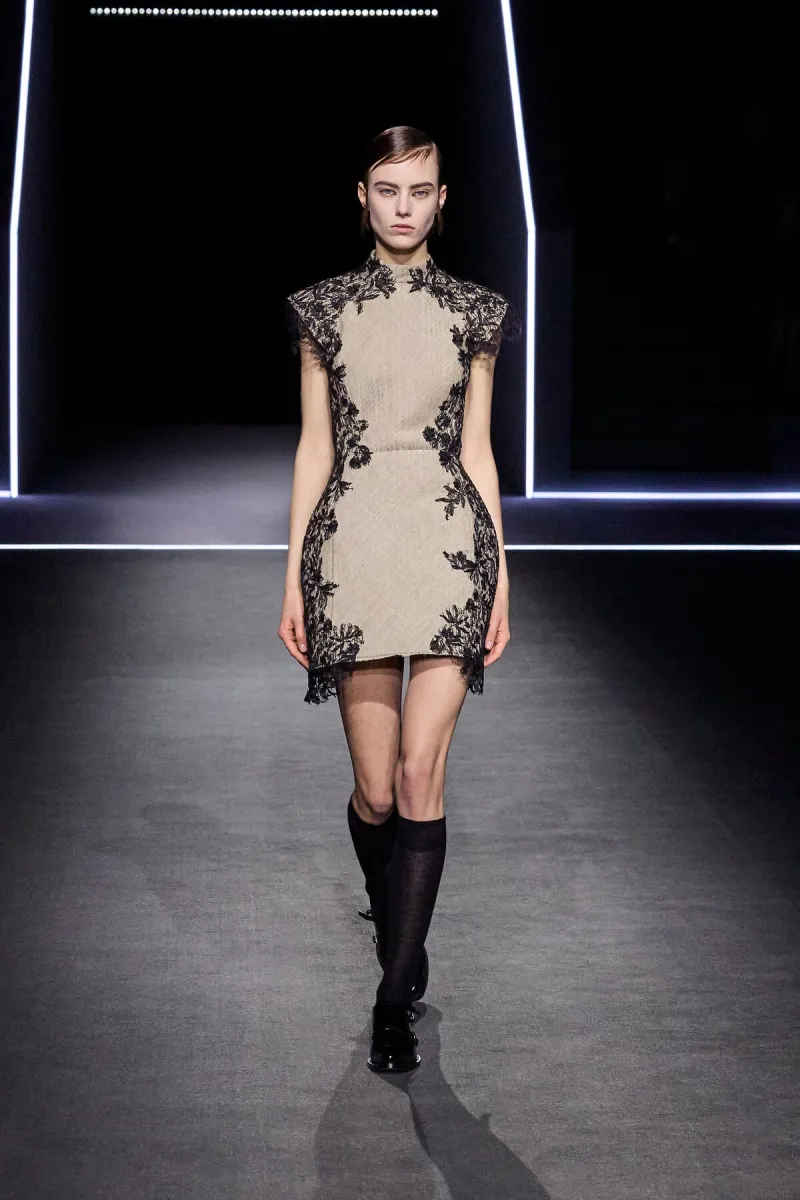
Photo: fashion designer examining fabric texture close up studio, via diorama.dam-broadcast.com
There is a moment, familiar to anyone who has stood in a dressing room holding two versions of the same silhouette, when the eye becomes irrelevant. The cut is identical. The color is the same. And yet one garment settles onto the body as though it belongs there, while the other resists—stiff, indifferent, slightly wrong in a way that defies precise articulation. What separates them, almost always, is fabric. Not its appearance, but its behavior.
This is the conversation that most fashion discourse leaves unexamined. We speak extensively about silhouette, proportion, color, and trend. We speak far less about the tactile and neurological transaction that occurs the moment cloth meets skin—and what that transaction communicates about who made the garment, for whom, and with what understanding of the human body in motion.
Fabric as a Physical Argument
Every material makes an argument about the body it is designed to inhabit. A densely woven double-face cashmere argues for stillness, for occasion, for the kind of deliberate presence that requires a room to adjust itself around you. A softly brushed cotton jersey argues for ease, for continuity between dressed and undressed states, for the body as something that should be accommodated rather than shaped. Neither argument is superior. But both are positions—and a designer who selects fabric without awareness of that position is, in effect, making a philosophical claim without understanding its implications.
This is why material selection sits at the center of serious design practice rather than at its periphery. At Joan Design, the process of choosing a fabric begins not with a swatch card but with a question: what is this garment asking the wearer to do? To stand still and be seen? To move through a city without constraint? To sit across a table for six hours and remain composed? Each answer demands a different material intelligence—and a different relationship between cloth and body.
The Neurological Dimension
Research in sensory psychology has documented what skilled designers have understood intuitively for decades: the skin is not a passive surface. It is an active information-gathering system, and the signals it receives from clothing influence mood, posture, cognitive state, and self-perception in measurable ways. Rough textures trigger low-level stress responses. Soft, weight-bearing fabrics—think a well-constructed wool melton coat—can produce a sensation of grounded calm that lighter materials simply cannot replicate. Fabrics with natural temperature regulation, such as merino or fine linen, reduce the micro-distraction of physical discomfort, allowing the wearer to remain mentally present rather than perpetually adjusting.
This is not metaphor. It is physiology. And it means that a designer who truly understands their customer is, in some sense, practicing a form of applied neuroscience—selecting materials not only for what they look like under a showroom light but for how they will perform against a nervous system over the course of a full day.
Self-Knowledge as a Design Prerequisite
Here lies the dimension that distinguishes thoughtful material selection from mere technical competence: it requires the designer to possess a working theory of the wearer's inner life. Not their demographic profile or their price sensitivity, but their actual relationship with their own body—how they inhabit physical space, where they experience tension, what conditions allow them to feel most fully themselves.
A wearer who moves through the world with physical confidence and an appetite for sensation will often gravitate toward fabrics that respond dynamically—silk charmeuse that shifts with every gesture, open-weave linen that breathes visibly, raw-edge textiles that carry a sense of aliveness. A wearer who draws composure from structure—who needs their clothing to hold a shape independent of their posture on any given day—will find security in materials that remember their own form: a bonded technical fabric, a tightly woven tropical wool, a firm cotton poplin that does not ask anything of the body beneath it.
Neither preference is a character flaw. Both are forms of self-knowledge. The designer's role is to recognize and honor that knowledge, not override it with an aesthetic preference that serves the garment's appearance more than the wearer's experience.
When Material Contradicts Intention
Some of the most persistent failures in contemporary fashion arise from precisely this misalignment—garments whose visual language promises one experience and whose material reality delivers another. A minimalist silhouette cut in a fabric that clings and shifts with every movement creates anxiety rather than serenity. A relaxed, oversized shape rendered in a stiff, unyielding textile produces discomfort rather than ease. The eye is satisfied; the body is not.
This disconnect is more common than it should be, particularly in market segments where cost pressures push designers toward fabric substitutions that preserve the visual effect while eliminating the experiential one. The result is clothing that photographs beautifully and wears poorly—a distinction that becomes apparent only after purchase, and that erodes the trust between designer and wearer more thoroughly than any aesthetic misstep.
For a studio committed to the long-term relationship between a garment and its owner, this kind of compromise is not a minor inefficiency. It is a fundamental breach of the implicit contract that serious design represents.
Reading the Material as Language
Learning to read fabric as language—rather than simply as surface—is one of the most valuable capacities a thoughtful consumer can develop. It begins with paying attention to the body's response rather than the eye's approval. Does this fabric make you hold yourself differently? Does it require you to move carefully, or does it move with you? Does it feel like an extension of your own skin, or like a costume you are performing inside?
These are not trivial questions. They are the same questions a skilled designer asks during the development process, and they deserve the same seriousness in the fitting room. A garment that consistently fails to answer them satisfactorily—regardless of how precisely it aligns with current visual trends—is a garment that does not yet know its wearer.
The most enduring pieces in any wardrobe are almost never those that looked the most impressive on a hanger. They are the ones whose material choice reflected an accurate, generous understanding of a specific body and a specific life. That understanding is what transforms cloth into clothing—and clothing into something that genuinely belongs to the person wearing it.